
Smarter After-Hours Lighting That Works While You Sleep
After dark, your office building does not really close. People still come and go, even if it is just a few late workers, cleaning crews, or security staff. At the same time, the property can attract the wrong kind of attention if it looks empty or poorly lit. Good after-hours lighting helps people feel safe, makes it easier to move around, and sends a clear signal that your building is cared for.
In Cypress, parking lots, walkways, side doors, and loading areas can quickly feel unsafe when lights are too bright in the wrong spots or too dim in the right ones. Leftover light from the day is not enough. You need a plan. With smart controls like photocells, timers, motion sensors, and custom schedules, you can keep key areas bright when needed, keep dark corners from becoming hiding spots, and avoid wasting energy by leaving every light on all night.
A well-planned exterior also says a lot about your brand. When clients pull in early in the morning or arrive for an evening meeting in a professional office park, they notice if the building looks clean, safe, and thoughtfully lit. That first look at your business exterior lighting in Cypress, TX can shape the way they feel about everything that happens inside.
Why Your Cypress Office Needs a Nighttime Lighting Plan
Many properties fall into one of two traps: lights on everywhere all night, or random fixtures on timers that no one has checked in years. Both choices can cause problems. Wide dark spots next to a bright main entrance, a side door in deep shadow, or a back lot with no light at all can invite the wrong activity or increase the chance of trips and falls.
Some common risks of a loose, “set it and forget it” approach include:
- High utility bills from big floods burning in empty lots
- Blind spots near side doors or trash enclosures
- Poorly lit stairs, ramps, or walkways
- Loading and delivery zones that look like easy targets after closing
Here in Cypress, daylight changes a lot across the year. Winter evenings get dark earlier during busy work hours. In spring and summer, meetings, training sessions, and client events often stretch later into the evening. Without a true nighttime lighting plan, you either over-light your property or leave people walking through pockets of darkness.
A written after-hours lighting policy helps clear things up. It can spell out:
- Which areas stay lit all night for safety and security
- Which spaces use motion-based lighting only
- Who updates schedules and handles overrides
- Who checks on fixtures and controls during routine maintenance
If your office is part of an office park or subject to HOA rules, that plan should also fit any lighting limits or guidelines on brightness and fixture placement. Safety, clear wayfinding, and respect for shared spaces all need to work together.
Using Photocells and Timers to Eliminate Energy Waste
Photocells, also called dusk-to-dawn sensors, are small devices that read natural light levels. They turn fixtures on when it gets dark enough outside and off when it brightens again. Since they react to actual conditions instead of a set clock time, they adjust on their own when daylight hours shift across the seasons or when a storm makes things darker earlier.
Timers and smart time clocks give you another layer of control. With them, you can:
- Turn parking lot lights on shortly before closing time
- Turn most of those lights off once staff and visitors are gone
- Keep a few key safety fixtures on overnight
- Set different schedules for weekdays, weekends, and holidays
Compare two buildings: one where every exterior light is hardwired to stay on from late afternoon to sunrise, and another where photocells turn on only at dusk and timers shut down nonessential zones overnight. The second building still looks active and safe, but it is not pouring light and energy into empty spaces for no reason.
Some best practices for photocells and timers include:
- Mounting photocells where they see natural ambient light, not shining fixtures
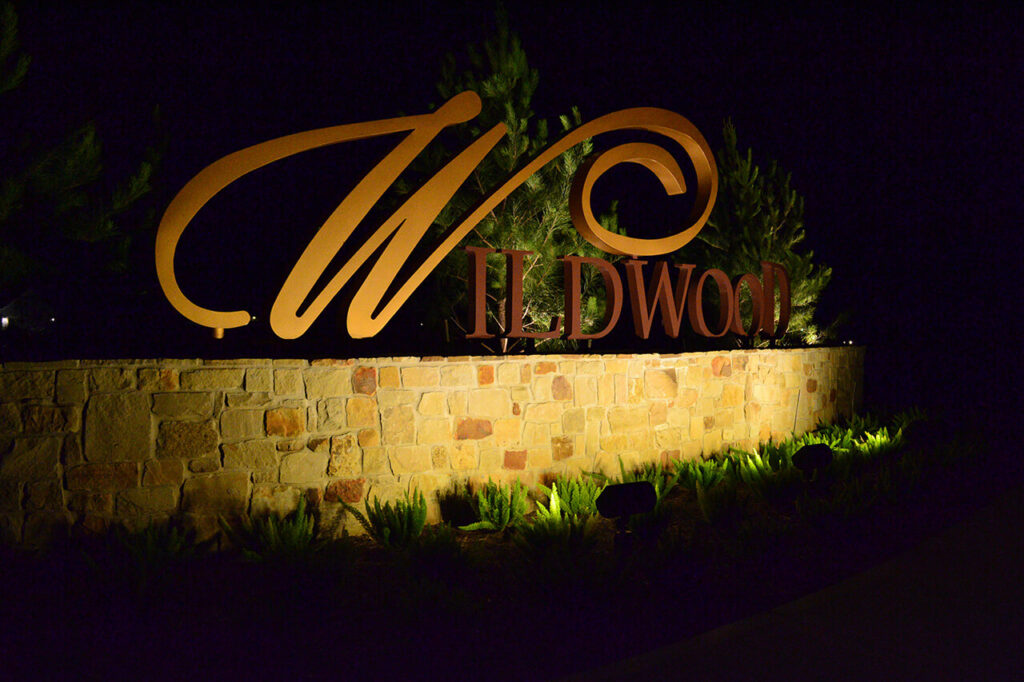
- Pairing timers with building signs and monuments so your brand stays visible at smart hours
- Checking timer settings at time changes and when business hours shift
When these controls are planned as part of a full system, they make your lighting feel smooth and natural, not choppy or random.
Motion Sensors and Zoning for Targeted Security Lighting
Motion sensors react to movement in a defined area and tell your lights to switch on or brighten for a set time. For business exterior lighting in Cypress, TX, they work especially well near entrances, loading docks, alleys, and rear parking spots where no one should be hanging around for long.
The secret is to think in lighting zones:
- High-security zones: main and side doors, cash-handling doors, loading docks, delivery gates
- Safety zones: stairs, ramps, accessible paths, main walkways from lot to entry
- Low-priority zones: far corners of lots, extra landscaping, long fence lines
You might keep a steady, low-level light on in safety and main entrance zones, then use motion-activated fixtures in lower-traffic spots. When someone enters those quiet areas at night, the sudden light can discourage unwanted activity and also help cameras capture clearer images, without keeping the area bright all night.
A few practical tips for motion-based systems:
- Choose a detection range that matches the space and use
- Mount sensors high enough to avoid constant triggers from small animals
- Angle the sensors so they see people approaching, not just passing cars on the street
- Coordinate with cameras and alarm systems so the whole security setup works together
Done well, this kind of zoning makes your property feel watched over without being harsh or glaring to neighbors or passing drivers.
Smart Scheduling Strategies for Seasonal and Staff Needs
A smart lighting schedule thinks about people first, then equipment. On a typical weekday, you might:
- Bring most exterior lights up at dusk as staff are leaving
- Keep parking lot and walkway lights at full brightness until the building is cleared
- Shift to partial lighting while cleaning crews and maintenance finish up
- Move to security-only lighting late at night until early morning arrivals begin
Seasonal shifts matter too. In late fall and winter, you may need lights on earlier in the evening so staff are not walking to their cars in the dark. In spring, like now, social and client events often run later, so you may keep front-entry and signage lighting active a bit longer while still cutting back in low-priority zones.
Good systems also allow for flexible overrides without redoing the entire program. Property managers may need to:
- Extend lighting in loading zones for a late shipment
- Bring lights up early for a contractor or inspection
- Boost front entry lighting for an evening event
With photocells and timers working together, these changes can be easier and faster to manage while keeping your building looking consistent and professional from nearby roads and neighboring properties.
Partnering with Local Pros to Upgrade After-Hours Lighting
A simple way to start improving your nighttime lighting is to walk your property after dark. Take notes on:
- Dark spots along paths, stairs, or side doors
- Areas that feel over-lit or cause glare
- Fixtures that stay on even when no one uses that space
- Any flickering, damaged, or burned-out lights
That quick walk gives you a real-world view of what employees, visitors, and even potential intruders see. From there, a lighting specialist can suggest how to combine photocells, timers, motion sensors, and smart zoning into a plan that matches your building size, layout, and risk level.
As a local, veteran-owned outdoor lighting company based in the Cypress area, we spend our nights looking at buildings the way a stranger would see them. We understand how to balance safety, security, and appearance so your property looks welcoming and guarded at the same time. With a thoughtful design and the right controls, your business exterior lighting in Cypress, TX, can work quietly in the background while you sleep, saving energy and helping protect what you have built.
Get Started With Your Project Today
If you are ready to upgrade your property’s curb appeal and safety, our team at Texas Natural Concepts is here to help design and install tailored business exterior lighting in Cypress, TX. We will collaborate with you to create a lighting plan that fits your brand, meets local requirements, and works within your budget. To discuss your goals or request a quote, simply contact us and we will follow up promptly with next steps.