
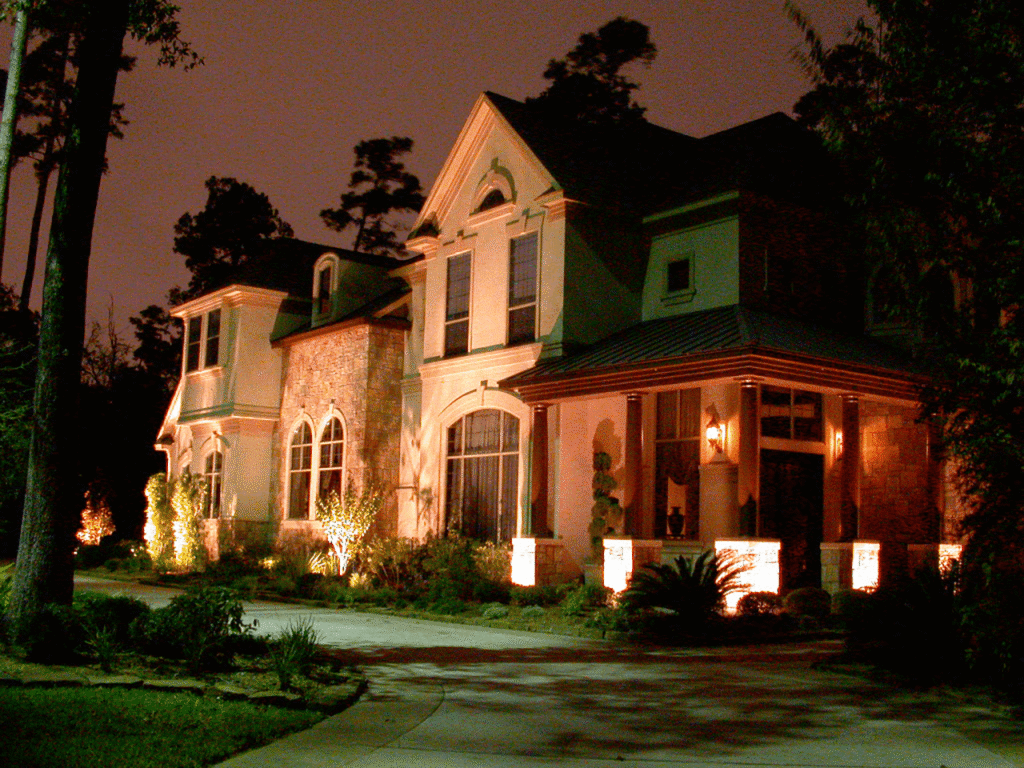
Light Your Driveway for Safer Nights and Clearer Cameras
Driveway lighting design is not just about sticking a few bright fixtures along the concrete. The wrong lights can blind you when you pull in, wash out your camera footage, and still leave dark patches near the garage or street. The right setup makes turning in, backing out, and checking your security cameras feel calm and easy instead of stressful.
In Cypress and across the Houston area, evenings are busy. People are getting home from work, picking up kids from practice, heading out to dinners and graduation parties, and pulling into the driveway after dark. In late spring, we enjoy longer daylight, but night events still stretch into the evening, and hurricane season is never far away. In this post, we will walk through driveway lighting basics, like fixture placement, spacing, and beam angles, so your driveway feels safer, looks better, and works with your cameras instead of against them. As a local, family- and veteran-owned outdoor lighting company, we care a lot about turning outdoor areas into comfortable, livable spaces, and the driveway is where that comfort starts.
Why Driveway Lighting Design Matters in Cypress
A well-thought-out driveway lighting design makes a bigger difference than many people expect.
For drivers and guests, good lighting:
- Clearly outlines the edges of the driveway
- Helps you see curves, slopes, and turns
- Reduces trip hazards along pavers and joints
- Makes it easier to see kids, pets, and yard toys
On many Cypress streets, driveways are not just straight slabs. They curve around beds, slope toward the street, or widen into parking areas. If lights are too bright or aimed the wrong way, they create harsh hot spots and deep shadows. Your eyes struggle to adjust, and it actually becomes harder to judge distance when turning. That is when someone can miss the edge or not see a bike left near the garage.
Lighting also plays a big role in security and camera performance. Cameras need balanced, even light to capture clear footage. When a bare bulb points right at the lens, it blows out faces and license plates. When the driveway is dark and only the porch is bright, you end up with silhouettes and blurry shapes instead of useful clips. Thoughtful driveway lighting helps your cameras see what you want them to see, at your garage doors, gate, or front entry.
Cypress neighborhoods also care about curb appeal and HOA rules. Tasteful lighting can:
- Highlight plant beds and stonework along the drive
- Make the home feel welcoming from the street
- Keep brightness in check to respect HOA guidelines
- Tie in nicely with existing front yard lighting
When the design is done well, it feels like an upgrade to the whole property, not just a way to see the concrete.
Glare-Free Fixture Placement for Cars and Cameras
To avoid glare, we need to think about where eyes and lenses sit. Drivers look horizontally across the driveway, not straight down at the ground, and cameras usually point outward from the house.
For drivers, it helps to:
- Keep fixtures low to the ground instead of at eye level
- Place lights off to the sides, not right in the line of travel
- Use shielded path lights, low bollards, or in-ground well lights
Along a straight driveway, low fixtures spaced along both sides create a soft edge that guides you in. On a curved drive, we like to mark the inside of the curve so it is easy to see where the pavement bends. Because the light spreads across the surface instead of straight into your eyes, you get good visibility without that blinding punch.
For cameras, look at the driveway from the camera’s point of view. If a fixture is visible as a bright dot, it is probably in the wrong place. We often aim for cross-lighting, which means the light is coming from the side or front of what the camera sees, not from behind it. That way, faces and vehicles are lit evenly instead of turning into glowing blobs or dark outlines.
Garage and entry lighting play into this too. Many homes have very bright open-bulb sconces over the garage. Those can overpower driveway lights and ruin camera footage. Using shielded fixtures, warmer color temperatures, and reasonable lumen levels over the garage lets the driveway lighting do its job. When all three areas, driveway, garage, and front entry, are planned together, you get a smooth wash of light instead of a few competing bright spots.
Smart Spacing and Beam Angles for Even Coverage
Even coverage is what keeps your eyes comfortable and your cameras clear. Spacing and beam angles are two simple tools that make a big difference.
For typical Cypress driveways, a good starting point is:
- Path or small bollard lights about 8 to 12 feet apart
- Closer spacing for lower-output fixtures
- Wider spacing for brighter fixtures with broader beams
On longer, gated, or circular drives, it often works best to mix wide-spread fixtures with key focal points at the gate, curves, and parking pads. You do not need every inch lit like a parking lot. Instead, focus on guidance points that help you track the path.
Beam choice matters too. Narrow beams are great for:
- Gate columns
- Address pillars
- Special stonework near the driveway
Wider beams work better for washing across pavement or lighting a parking apron. Tilting fixtures slightly downward keeps the light on the ground instead of in your eyes or your neighbor’s windows. Shielded optics help keep beams tight and directed so they do not flare into cameras.
In our warm, humid climate, storms and wet pavement are part of life. Water on the driveway can create strong reflections, so proper tilt and shielding help control that glare. We prefer durable, sealed fixtures that handle heat, moisture, and the occasional standing water along the edges. Getting spacing and angles right in late spring pays off when you are pulling in at night during a summer storm or during those earlier fall sunsets.
Integrating Driveway Lighting with Your Landscape Design
Driveway lighting should not feel like a separate system. It should blend in with the overall outdoor lighting around your home.
A few simple ideas help tie everything together:
- Match fixture finishes with your home’s trim or hardware
- Repeat similar fixture styles used in your front yard lighting
- Align brightness levels so no single area feels overpowering
We try to blend function and beauty. That might mean softly lighting a tree near the driveway or accenting stone along a curve while still keeping the pavement clear and safe. Instead of turning the driveway into a runway, we aim for a “less but better” approach. A handful of well-placed fixtures at the start of the drive, on the bends, and near parking spots work better than a long line of bright lights.
Accent lighting can also help with wayfinding without extra glare. Gently lighting a gate pillar, house numbers, or a mailbox makes it easier for guests to find the home, especially during evening events.
Respect for neighbors and the night sky matters too. Downward-directed, shielded fixtures and warmer color temperatures reduce light spill into nearby windows. Timers and control systems can dim or switch off some lights later in the night. This kind of thoughtful design is not only polite, it also makes your own nighttime experience more comfortable and helps security cameras perform better.
Get Started With Your Project Today
If you are ready to transform your property, explore our expert approach to driveway lighting design and see what is possible for your home. At Texas Natural Concepts, we take the time to understand how you use your space so your lighting is both beautiful and practical. We will guide you from initial concept to final installation with clear communication at every step. To talk through your ideas or schedule a consultation, simply contact us.