
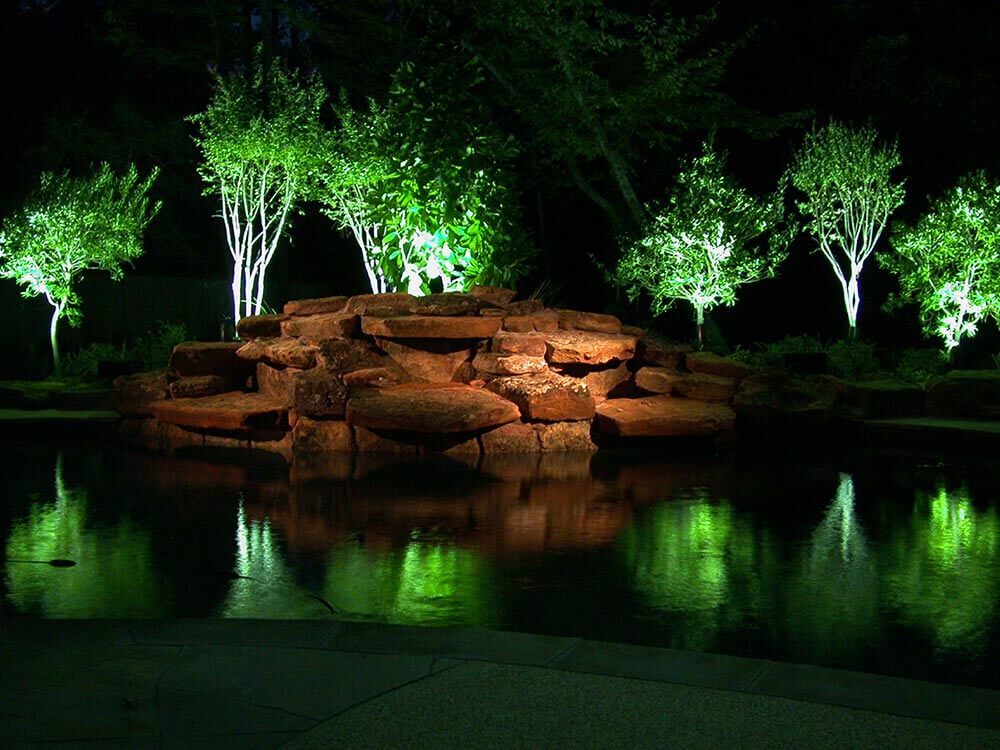
Outdoor lighting should do more than just help you see where you are walking. Professional landscape lighting design turns a dark yard into a comfortable outdoor room where you actually want to spend your evenings. In Cypress, where warm nights stretch long past dinner, good lighting means more time outside with family and friends.
In this article, we will walk through what a true professional landscape lighting design process looks like, step by step. We will talk about design walks, lighting layers, fixture choices, mockups, and final aiming. Along the way, we will compare that with simple installer-only lighting, so you can spot the difference in your own yard.
How Thoughtful Lighting Design Transforms Cypress Nights
On a late summer night in Cypress, many yards are either pitch black or blasted with a few bright floodlights. Both feel uncomfortable. One is too dark to enjoy, the other feels like a parking lot, not a place to relax.
Professional landscape lighting design is different. It is:
- Design-driven instead of product-driven
- Planned for how you live, not just where posts or walls happen to be
- Intentional about safety, views, and mood
When lighting is designed instead of just installed, your backyard starts to feel like another living room. Trees glow softly instead of disappearing. Paths are clear. The grill area is bright enough to cook, but your seating area feels warm and calm. That is the goal of professional landscape lighting design in Cypress.
The Onsite Design Walk That Starts It All
A real lighting plan starts with a site walk. We like to visit in late afternoon and stay into dusk, or come after dark, so we can see how your property actually behaves at night.
During that walk, we:
- Study your trees, flower beds, and hardscape
- Notice elevation changes, slopes, and steps
- Look at dark corners and where shadows fall
- Check sightlines from inside the house and from the street
We also ask questions about daily life in your yard. Do kids toss a football on the lawn? Do you grill on weeknights? Host pool parties on weekends? Which areas feel a little unsafe when you are out there at night? What parts of the house or yard are you most proud of and want to highlight?
Installer-only lighting often skips most of this. Someone might quote based on a satellite image, a quick daytime visit, or a standard package. That means no real attention to:
- How the yard looks after dark
- Glare into windows or onto neighbors
- How long summer evenings and shorter winter days change when and how lights are used
Without that walk, the lighting is mostly guesswork.
Building Lighting Layers Instead of Just Adding Lights
Once we know how you use the space, we think in layers, not individual fixtures. This is one of the biggest differences between design work and basic installation.
We plan three main layers:
- Ambient lighting gives a soft overall glow so your yard feels welcoming
- Task lighting brightens work areas like outdoor kitchens, gates, steps, and pool edges
- Accent lighting highlights trees, the house facade, water features, or art
When these layers are balanced, you avoid common problems, like:
- A harsh, “stadium” feel from too much bright light in one place
- Random bright spots floating in a sea of darkness
- Blinding glare when you look across the yard
- Dark pockets on paths or around the pool
Installer-only lighting often uses one fixture type and one wattage, spaced evenly around the yard. That approach can make everything look flat and washed out. There is no depth, no contrast, and often, still no real safety on steps and walkways.
Why Fixture Specs and Placement Matter so Much
Not all fixtures are the same, and in a humid, Gulf Coast climate like Cypress, the details matter. When we design a system, we think about:
- Beam spread (narrow beams for tall trees, wider beams for broad walls)
- Lumen output (how bright the light actually is)
- Color temperature (warm white feels cozy, cooler white feels more modern and crisp)
- Finish and build quality that hold up to local soil and moisture
Placement is just as important as the fixture itself. Good placement means:
- Avoiding “hot spots” where one area is blasted with light
- Nesting fixtures in plant beds or behind stones so the light shows, but the hardware almost disappears
- Planning for tree and shrub growth so branches do not block beams in a couple of years
- Preventing glare into windows, neighbors’ yards, or drivers’ eyes
Installer-only jobs often choose lights mainly based on what is in stock or cheapest at the moment. That can lead to:
- Mismatched color tones across the yard
- Too many or too few fixtures in key spots
- Parts that break down faster in Houston-area weather
Those shortcuts show up at night and over time.
Nighttime Mockups, Fine-Tune Aiming, and Final Adjustments
Another big difference with true design work is what happens before and after the main install. For important areas like big oak trees, pool decks, or large patios, we may set up temporary mockups with sample fixtures at night so you can see how different options feel in real life.
This helps you compare:
- How bright or soft you want certain areas
- Which trees or features to highlight most
- Where you want more drama and where you want calm, even light
After the system is installed, nighttime aiming is key. We return after dark to:
- Adjust beam angles so trunks, canopies, and stone textures show clearly
- Tilt path lights so they do not glare into your eyes
- Nudge fixtures a bit to fix shadows on steps or along the pool edge
Installer-only lighting often ends when the last fixture is wired. There is no nighttime check, no fine tuning, and no second look at how light actually lands on your home. Homeowners are left with lights that might hit the wall too hard, shine into windows, or leave dark spots in critical places.
How to Choose a True Lighting Designer in Cypress
If you are trying to decide who to trust with your yard, a few smart questions can help you spot real design work.
Ask potential providers:
- Do you come for a nighttime or dusk visit?
- How do you think about lighting layers in a yard like mine?
- What kind of fixtures do you typically specify, and why?
- Do you offer mockups or nighttime aiming and adjustments after installation?
Also:
- Nighttime photos of completed projects, not just daytime shots of fixtures
- Custom plans instead of one-size-fits-all “packages”
- Familiarity with Cypress neighborhoods and HOA expectations
This time of year, many families are thinking about back-to-school routines, fall gatherings, and holiday evenings outdoors. It is a great moment to plan lighting that is energy-smart and built to last through sun, storms, and mild winters here in the Houston area.
When you choose a true lighting designer instead of an installer-only option, you are investing in how your home feels every night. The right process can turn your Cypress yard into a place you actually use and enjoy, long after the sun goes down.
Get Started With Your Project Today
Bring your outdoor spaces to life after dark with our tailored professional landscape lighting design that highlights the best features of your property. At Texas Natural Concepts, we collaborate with you to create a lighting plan that fits your style, enhances safety, and adds lasting curb appeal. If you are ready to explore ideas or schedule a consultation, contact us so we can help you design a landscape you will enjoy every evening.