
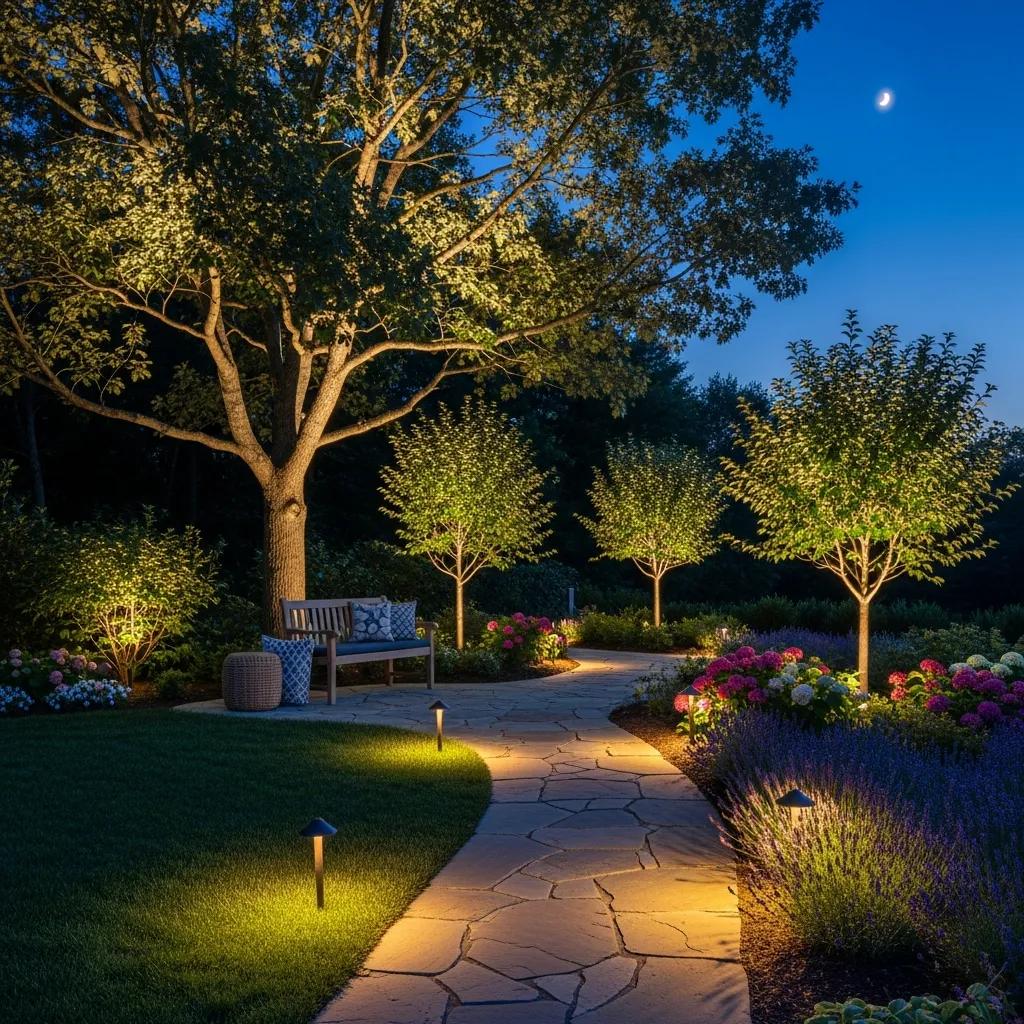
Downlighting gives you focused, practical light where you need it most; moonlighting casts a soft, tree-filtered glow that feels like natural moonlight. This guide walks Houston homeowners through both options so you can decide what matters most: safety, atmosphere, or a mix of both. You’ll get plainspoken definitions for each technique, a look at installation and aiming, the fixtures that work best for different yards, and a short, locally minded checklist to guide your decision. We also cover energy and maintenance trade-offs, current trends like LED retrofits and smart controls, and how to pick a pro for installation. When you’re ready, we explain how to request a free design consultation with a local lighting specialist.
Research consistently shows thoughtfully designed outdoor lighting delivers benefits well beyond simple visibility.
Outdoor Lighting: Enhancing Safety, Ambiance & Well-being Artificial outdoor lighting plays several important roles. In addition to functional roles such as improving visibility and providing orientation, outdoor lighting is increasingly required to contribute to the lifestyle and feeling of emotional well-being of people outside at night. In this regard, outdoor lighting can help to increase the feeling of safety and security among pedestrians, as well as to enhance the attractiveness, ambience and appearance of an illuminated area. Effect of outdoor lighting on perception and appreciation of end-users, J van Kemenade, 2007
What Is Downlighting in Outdoor Landscape Lighting?
Downlighting places fixtures up high—on soffits, eaves or taller branches—and aims light downward to create controlled pools that improve visibility and accent vertical surfaces. Shielded fixtures and tighter beam angles reduce glare while directing useful light onto steps, walkways and architectural details. The result is task-ready illumination that supports evening activity, improves safety, and brings out textures like stone or siding without flattening the scene. Understanding beam spreads, mounting heights and shielding helps you get functional light that stays comfortable. Below we break down the safety advantages and common fixtures so you can plan an effective downlighting layout.
How Does Downlighting Enhance Safety and Highlight Architectural Features?

Downlighting improves safety by giving crisp, directional light where people walk and gather, which reduces trips and lets you use outdoor spaces later into the evening. Properly aimed downlights on porches and stairs create visible contrast between risers and treads, lowering fall risk and removing dark hiding spots that invite trouble. At the same time, downlighting sculpts architecture—vertical washes reveal brick, columns and rooflines—so nighttime curb appeal matches daytime craftsmanship. For Houston homes, aim downlights at entry steps, pool edges and patio thresholds, and choose warm color temperatures (2700K–3000K) to keep spaces inviting. These practical benefits point straight to fixture selection and placement strategies that deliver reliable results.
What Are Common Fixtures and Placement Techniques for Downlighting?
Typical downlighting fixtures include shielded soffit lights, recessed tree-mounted downlights and adjustable low-voltage LEDs that concentrate light without glare. Rules of thumb: mount fixtures high enough to widen coverage without creating hot spots, use narrow beams for focused highlights and wider beams for broader task areas, and stagger fixtures so light overlaps smoothly. Installation best practices include sizing transformers for the whole run, protecting low-voltage wiring with conduit or buried-rated cable, and choosing fixtures with suitable IP ratings for Houston’s humid climate. Low-voltage LED fixtures cut energy use and simplify upkeep; careful aiming during install prevents light trespass and keeps neighbors happy. With these basics in place, we can contrast downlighting with moonlighting’s softer approach.
What Is Moonlighting and How Does It Create Natural Ambiance?
Moonlighting puts fixtures up in tree canopies or on tall structures, aiming light down through leaves so it filters and dappled patterns appear on the ground—much like real moonlight. By positioning lights above the canopy, you let foliage break and soften the beam for layered shadows and gentle pools that read as organic rather than engineered. Moonlighting is about atmosphere: it turns yards into relaxed, natural-feeling rooms for entertaining, quiet evenings or subtle security that doesn’t feel institutional. If your property has mature trees and open lawns, moonlighting can extend usable outdoor time with a low-contrast, cinematic wash that invites people to linger. The next sections explain aiming, concealment and where this technique shines.
How Does Moonlighting Mimic Natural Moonlight Through Tree Canopies?
Moonlighting recreates moonlight by mounting fixtures high—often 10–20 feet or more—inside tree branches and angling them downward so light filters through leaves and creates soft, dappled patterns on lawns and hardscapes. Installers typically shield fixtures, hide hardware among branches and aim carefully to avoid direct glare so the source stays unseen and the effect feels natural. Breeze and leaf movement add subtle motion, animating shadows and increasing depth—especially effective near pools, open lawns and garden clearings. Concealment and the right beam selection are key to keeping the light gentle and avoiding harsh spotlighting. Choosing warm color temperatures (2700K–3000K) helps preserve the natural illusion. These installation details will help you judge whether your trees can produce a convincing moonlight effect.
What Are Ideal Settings and Benefits of Moonlighting for Outdoor Spaces?

Moonlighting performs best where mature trees, broad lawns and open entertaining areas let high, indirect light reach surfaces without obstruction. Beyond beauty, moonlighting offers low-glare, human-scale security that improves visual comfort and encourages evening use of patios and gardens. It pairs nicely with subtle path lighting that guides movement without stealing the scene. In Houston yards that host gatherings, moonlighting over poolside trees or dining areas softens edges and keeps sightlines open while improving nighttime usability. Combined with mosquito misting systems for comfort, moonlighting can make evenings in your yard longer and more enjoyable. Those practical benefits make it an appealing choice for homeowners who favor atmosphere and relaxed evening living.
What Are the Key Differences Between Downlighting and Moonlighting?
Knowing the differences between downlighting and moonlighting helps you match technique to purpose: downlighting is task- and feature-oriented, while moonlighting prioritizes atmosphere and naturalism. Downlighting delivers precise illumination—steps, facades and pathways—using controlled beams and closer mounting to maximize visibility and highlight form. Moonlighting uses elevated placement and canopy filtering to create soft, dappled washes over larger areas, favoring comfortable spatial perception over crisp task lighting. Those differences affect fixture choice, aiming and installation location, so understanding them clarifies which approach fits your goals. For a quick side-by-side reference, see the table below.
| Lighting Style | Characteristic | Typical Best Use |
|---|---|---|
| Downlighting | Focused, directional illumination | Steps, doorways, facades, patios |
| Moonlighting | Diffused, dappled ambient glow | Large lawns, poolsides, entertainment areas |
| Downlighting | Mounted on eaves, soffits, or lower branches | Narrow yards, architectural emphasis |
| Moonlighting | Mounted high in tree canopies | Mature-tree properties, open yards |
| Downlighting | Sharp contrasts, clear task lighting | Safety-critical zones and entryways |
| Moonlighting | Soft shadowing and natural ambiance | Ambiance-driven outdoor living spaces |
How Do Purpose, Light Effect, and Placement Differ Between the Two?
Purpose, light effect and placement separate the two styles in useful ways. Downlighting’s purpose is practical—task and security—directing light where people move. Moonlighting’s purpose is atmospheric—recreating a natural, calming backdrop for evening activities. The resulting effects differ: downlighting creates sharper highlights and clearer shadows that define form; moonlighting produces soft, mottled light that feels layered and natural. Placement is also distinct: downlights sit on structural edges or lower branches to target surfaces, while moonlights sit higher in canopies so foliage modulates the beam. Considering these factors together helps you choose the technique that best meets your needs.
Which Lighting Style Best Suits Specific Outdoor Areas and Needs?
Match style to space and purpose for the best results. Narrow paths and tight yards usually benefit most from downlighting and path fixtures, while larger properties with trees see dramatic returns from moonlighting. Many pools and entertaining terraces work beautifully with a combination—moonlighting for overall mood and downlighting for steps, entries and task zones—so you get both atmosphere and safety. For family-focused yards where visibility is essential, prioritize downlighting near play areas and pool edges and add moonlighting sparingly to soften the landscape. If evening social use and a natural vibe are priorities, center moonlighting in tree-rich zones and supplement with directional downlights for circulation. Use this mapping to build a practical plan or brief for your installer.
| Lighting Style Recommendation | Ideal Property Feature | Practical Recommendation |
|---|---|---|
| Downlighting | Narrow walkways, steps, structured patios | Use shielded soffit lights and narrow beams for clarity |
| Moonlighting | Mature trees, large lawns, poolside trees | Mount high in canopy with wide, soft beams for ambience |
| Combination | Entertaining yards and mixed-use landscapes | Layer moonlighting for mood and downlighting for tasks |
How to Choose the Right Outdoor Lighting Style for Your Houston Home?
Start by evaluating your property, nighttime activities and maintenance expectations to decide whether to prioritize safety, ambiance or a balanced mix. First, take inventory—mature trees, architectural focal points, pathways and entertaining areas—because available trees strongly influence how well moonlighting will work. Second, name the main uses for the space at night—hosting, family play, or security—and assign lighting to support those uses. Third, set a budget and consider energy choices like LED fixtures and smart controls that lower operating costs and simplify upkeep. This local assessment helps you choose fixtures and placements that handle Houston’s climate while matching your lifestyle. Below is a short decision checklist you can use right away.
This checklist boils the decision into clear steps.
- Assess Trees and Canopy: If you have mature trees with open lower branches, moonlighting is worth considering; otherwise favor downlighting.
- Prioritize Purpose: Use downlighting for safety and tasks; use moonlighting when ambiance and broad coverage matter most.
- Plan Layering: Combine moonlighting and downlighting where you need both mood and function.
- Factor Energy and Controls: Choose LED fixtures and smart timers for energy savings and flexible scene control.
Following this checklist will give you a clear lighting brief to share with a professional. The section below explains when to hire an installer and how local designers typically run consultations.
For homeowners ready to move from planning to installation, Natural Concepts offers a complimentary design consultation focused on Houston-area landscapes. As a family- and veteran-owned company specializing in custom landscape lighting and mosquito misting systems, we translate your property inventory into a layered lighting plan. Our consultative process reviews tree placement, architecture and how you use the space, then recommends fixtures, beam angles and control strategies that fit your budget and energy goals. Reach out by phone or email for a free review—usually a short onsite look clarifies whether moonlighting, downlighting or a blend will deliver the best long-term result.
Why Trust Natural Concepts for Your Downlighting and Moonlighting Needs in Houston?
Natural Concepts brings local experience and a service lineup built for Houston homes and businesses. We’re family- and veteran-owned, deliver award-minded design and custom lighting solutions, and offer free design consultations so installations reflect your goals. Our services go beyond design to include LED retrofits, smart control integration and maintenance plans, and our teams are licensed and insured to ensure consistent installation standards. We serve residential and commercial clients—architects, landscape contractors, property managers, homeowner associations and builders—so we understand the coordination larger projects require. That local focus helps translate design intent into dependable, code-aware installations that balance atmosphere and safety.
What Makes Natural Concepts the Leading Moonlighting Designers in Southeast Texas?
Moonlighting is one of our signature techniques. We work with local tree species and canopy structures to create natural-feeling nightscapes, and we use on-site assessments during our free consultations to recommend fixture placement, beam angles and control sequencing tailored to Houston properties. Our veteran-owned identity and local presence come with veteran discounts and a community-minded approach, while licensing and insurance back our workmanship. For homeowners exploring moonlighting, we provide project-specific design and fixture selection during the consultation so ideas translate into practical plans. That design-first method removes guesswork and speeds decision-making for homeowners who want usable, atmospheric outdoor spaces.
How Does Natural Concepts Ensure Quality Installation and Customer Satisfaction?
We maintain quality by deploying licensed, insured technicians who follow best practices in transformer sizing, low-voltage wiring protection and fixture aiming to avoid glare and light trespass. We stand behind our work with satisfaction-focused service and offer LED retrofits and routine support to keep systems performing well in Houston’s climate. Maintenance agreements and integrations—like smart controls and mosquito misting systems—help you protect your investment and keep outdoor spaces comfortable. By pairing trained technicians with a design-first approach and post-installation support, we reduce project risk and help you get long-term enjoyment from your lighting investment.
What Are the Latest Trends and Benefits of Landscape Lighting in Houston?
Today’s landscape lighting trends emphasize LED technology, warm color temperatures (2700K–3000K) and smart controls for scene-setting, scheduling and remote management. These trends improve energy efficiency, lower maintenance and create more natural, welcoming nightscapes. Warm LEDs preserve material and skin tones during evening gatherings and deliver big energy savings compared with older halogen systems, while smart controls let you automate layered scenes—run moonlighting for relaxed evenings and downlighting for pathways when needed. Pairing lighting with mosquito misting systems also extends usable outdoor time and increases the practical return on your investment. Below is a quick table linking trends to benefits and local services that support adoption.
| Trend | Benefit | Local Example / Service |
|---|---|---|
| LED adoption | Lower energy use and longer lifespan | LED retrofits to reduce operating costs |
| Warm color temperatures (2700K–3000K) | Natural, inviting ambiance | Fixture selection for patios and facades |
| Smart lighting controls | Programmable scenes and remote control | Scheduling moonlighting and path lighting |
| Integrated comfort systems | Extended outdoor use | Mosquito misting paired with lighting |
How Do LED and Smart Lighting Technologies Enhance Outdoor Lighting Efficiency?
LED fixtures cut energy use and maintenance needs by drawing far less power than older bulbs and offering much longer lifespans, which reduces replacement cycles and lifetime cost. Smart controllers and timers add programmable schedules, remote access and scene-setting so you can balance security and ambiance without manual effort; motion sensors can further reduce runtime for task lighting. Proper transformer sizing and quality low-voltage wiring simplify upkeep, and smart diagnostics can flag issues early. Local installers can retrofit existing systems with LED-compatible fixtures and recommend controller setups that match your usage, maximizing return on investment and everyday convenience.
How Does Outdoor Lighting Increase Property Value and Outdoor Living Enjoyment?
Good landscape lighting boosts curb appeal, makes properties feel larger and extends usable outdoor hours—showcasing architecture and gardens at night. Thoughtful lighting improves safety and lowers perceived risk, which buyers and guests notice; that can translate into greater desirability. For homeowners who entertain, better evening usability and comfort—especially when paired with mosquito misting systems—mean more enjoyable nights outside and fuller use of outdoor square footage.
Practical ways lighting increases enjoyment:
- Extended usability: Well-lit patios and pathways let you spend more time outside after dark.
- Improved safety: Clear visibility reduces accidents and helps guests feel at ease.
- Enhanced aesthetics: Lighting keeps architectural and landscape details visible and attractive at night.
These benefits show how lighting is both a functional upgrade and an investment in outdoor living quality.
Natural Concepts helps homeowners adopt these trends through LED retrofits, smart-control integration and maintenance services that keep systems running efficiently. If you’re considering upgrades, a free design consultation with a local specialist will clarify retrofit options and control strategies for your property.
| Trend | Benefit | How Natural Concepts Supports It |
|---|---|---|
| LED retrofits | Energy savings and longevity | Professional retrofit design and installation |
| Smart controls | Scene setting and automation | Controller selection and programming |
| Warm color temps | Natural, pleasing light | Fixture tuning and color-temperature recommendations |
- Start with a site assessment: Identify trees, architectural focal points and primary use areas.
- Prioritize layering: Use moonlighting for mood and downlighting for circulation and tasks.
- Choose LEDs and smart controls: Lower operating costs and gain flexible scene control.
These steps provide a straightforward roadmap for bringing contemporary landscape lighting to Houston yards.
Natural Concepts offers a no-cost design consultation and collaborates with property owners to build layered plans incorporating LEDs, smart controls and optional mosquito misting systems. To request a consultation or discuss project ideas, reach out by phone or email; conversations typically start with a site review and suggested lighting strategies tailored to local conditions.
Frequently Asked Questions
What are the energy efficiency benefits of using LED fixtures in outdoor lighting?
LED fixtures use far less energy than traditional lamps—often cutting consumption by up to 75%—and last many times longer, which means fewer replacements and lower maintenance costs. LEDs also offer more precise control over light output, so you can focus illumination where it matters and save energy elsewhere. The net result is a better-looking, lower-cost-to-run outdoor lighting system.
How can smart lighting controls enhance outdoor lighting experiences?
Smart controls add convenience and flexibility. With programmable schedules, scene-setting and remote access, you can automate lighting for different activities—entertaining, security or quiet evenings—without manual switching. Smart systems can integrate motion sensors to limit runtime and further cut energy use, and they let you change the mood of your yard with a tap or a schedule.
What maintenance is required for outdoor lighting systems?
Outdoor lighting maintenance mainly involves periodic inspections and cleaning. Check fixtures for dirt, debris or corrosion, and verify that connections and wiring remain secure. LED systems need less routine bulb replacement, but you should still verify transformer and control settings. Annual or biannual professional checks can catch issues early and keep the system working efficiently.
Can outdoor lighting improve home security?
Yes. Well-placed lighting reduces dark hiding spots and improves sightlines, which deters unwanted activity and helps residents and guests feel safer. Downlighting is particularly useful for illuminating entryways, steps and pathways, and motion-activated fixtures add an extra layer of protection by lighting areas only when activity is detected.
What factors should I consider when choosing between downlighting and moonlighting?
Think about purpose first. If safety and task lighting are your priority, downlighting is the practical choice. If you want a relaxed, natural atmosphere for entertaining or quiet evenings, moonlighting creates that mood. Also assess your landscape—tree height, canopy density and spacing—to determine whether moonlighting will be effective on your property.
How can I integrate both downlighting and moonlighting in my outdoor space?
Layering both approaches gives you the best of both worlds. Use downlighting for safety-critical areas like steps, walkways and pool edges, then add moonlighting in tree-rich parts of the yard to create mood and depth. The result is a balanced design that supports both function and atmosphere.
Conclusion
Choosing between downlighting and moonlighting—or combining them—can transform your outdoor space for safety and enjoyment. Downlighting offers precise, task-oriented illumination; moonlighting brings soft, natural ambiance. By assessing your property and how you use it at night, you can create a layered lighting plan that fits your lifestyle. For personalized help, schedule a free design consultation with a local expert who can turn your ideas into a practical, long-lasting plan.