
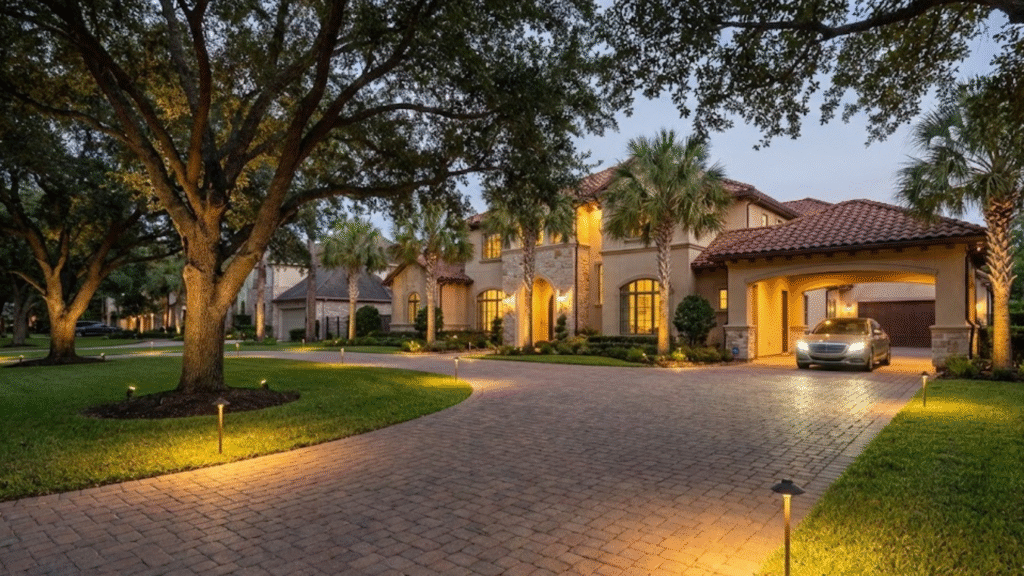
Driveway lighting is the intentional placement of outdoor fixtures to brighten vehicle and foot approaches, reduce risk, and shape how a home reads from the street. Thoughtful lighting lowers slips, trips, and minor vehicle damage, discourages unwanted activity, and creates a calm, upscale arrival that improves curb appeal across Houston neighborhoods. This page walks through how lighting delivers those benefits: what keeps arrivals safe, which fixtures and technologies work best, design strategies that raise perceived value, and what a professional design-and-install process looks like. You’ll find straightforward comparisons of LED, low-voltage, and solar options, practical spacing and placement rules, and clear next steps to book a consultation. Throughout, we focus on practical solutions—path lights, uplights, moonlighting, and smart controls—that layer visual interest with energy efficiency so your driveway is both safer and more elegant. After the safety basics, we cover technology choices, design techniques, and the typical professional workflow for Houston homes and businesses.
Why Is Driveway Lighting Essential for Safety and Security?
Driveway lighting matters because it lights the places where vehicles and people meet, improving detection and reaction time while increasing the chance an intruder will be seen. By clarifying edges, slopes, and obstacles, good lighting cuts down on slips, trips, and small fender benders; timed schedules and motion-activated fixtures also boost surveillance and deter trespassing. Picking the right color temperature and controlling beam spread preserves night vision for drivers and pedestrians, and it helps security cameras capture useful footage. Once you understand these mechanisms, the best placement and fixture decisions become clear and practical.
Well-designed driveway lighting creates continuous sightlines and reduces shadow gaps along paths and curb cuts. Fixtures with the correct beam spread and mounting height produce even illumination that calls out surface transitions, while warmer color temps keep contrast natural and easy to read. Next, we’ll get specific about placement for common driveway layouts and how spacing affects visibility.
How Does Driveway Lighting Prevent Accidents and Tripping Hazards?
Driveway lighting reduces accidents by creating steady light where people and cars move, which improves depth perception and the ability to spot obstacles after dark. Place path lights at edges, use bollards for wide drives, and add uplights to reveal steps or elevation changes—each tactic limits blind spots and harsh shadows. As a guideline, spacing generally falls between 8 and 15 feet depending on fixture output and beam angle: tighter spacing for narrow pedestrian routes, wider spacing for vehicle-focused runs. Anti-glare shields and directional beams keep light where it’s needed without blinding drivers, and these placement rules form reliable layouts for both new and existing driveways.
Those practical spacing and fixture choices also support security strategies—lighting patterns and smart controls that make a property harder to approach unnoticed.
In What Ways Does Driveway Lighting Deter Intruders and Enhance Security?
Driveway lighting raises the odds an intruder will be seen and helps a home read as occupied and monitored. Tactics like perimeter uplighting, scheduled lighting that mimics activity, and motion-activated fixtures draw attention to entry points and blind spots. When lighting is tied into smart controls and cameras, surveillance becomes far more effective. Layered lighting—ambient fills, task-level entry lights, and accent pieces—reduces hiding spots and improves camera performance at night, which helps law enforcement or neighborhood-watch efforts. Using dependable fixtures with sensible control strategies strengthens deterrence and gives homeowners greater confidence at night.
Research shows properly designed lighting measurably improves the ability to detect intruders at greater distances.
Security Lighting and Intruder Detection Studies indicate security lighting increases the distance at which a person can be detected; in tests a standard lamp compared favorably with high‑pressure sodium discharge lamps for intruder detection. Security lighting: Effects of illuminance and light source on the capabilities of guards and intruders, MS Rea, 1990
Keeping security goals in mind helps homeowners choose fixture technologies and installation methods that balance reliability with low maintenance—topics we cover next.
What Are the Best Types of Driveway Lighting Solutions?
Your best driveway lighting solution depends on goals, budget, and site conditions. Common choices include LED fixtures, low‑voltage wired systems, solar path lights, uplights, path lights, and moonlighting from trees. Each option balances energy use, lifespan, cost, and visual effect—LEDs are efficient and long‑lived, low‑voltage offers consistent, dimmable power and control, and solar eliminates wiring but performs variably with shade and weather. The short comparison below helps homeowners select the right fit for safety, curb appeal, and long‑term value.
Natural Concepts installs these systems throughout Houston using award‑informed design principles and licensed electricians for wired work; that professional backing matters on low‑voltage networks and complex uplighting schemes.
With that overview in mind, let’s look at why LEDs are often the best economic and performance choice.
| Lighting Type | Attribute | Typical Value |
|---|---|---|
| LED Driveway Lights | Energy Use | Low watts per lumen; high efficiency |
| Low-Voltage Systems | Lifespan | 10–20 years with quality fixtures and maintenance |
| Solar Path Lights | Cost Range | Low initial cost; variable long-term reliability |
| Motion Sensor / Flood Lights | Best Use | Security-focused, entry illumination |
| Uplighting (trees/architecture) | Visual Impact | High-accent; creates drama and depth |
Use this comparison to prioritize energy goals, aesthetics, and practical site constraints when planning your layout.
What Are the Benefits of LED Driveway Lighting for Energy Efficiency?
LED driveway fixtures deliver more usable light per watt than incandescent or halogen sources, which cuts monthly energy costs and lowers lifetime operating expenses. LEDs also last tens of thousands of hours, reducing replacements and maintenance visits, and they hold consistent color temperatures that preserve nighttime clarity. Because LEDs work well with dimmers and smart controls, they pair neatly with timers and motion sensors to further reduce energy use and stress on fixtures. For homeowners seeking efficient, low‑maintenance driveway lighting, LEDs are the logical front‑runner.
Research supports the energy and safety advantages of LED systems for outdoor lighting applications.
LED Lighting: Energy Savings & Traffic Safety Evaluations of LED road lighting note improvements in energy consumption and compliance with minimum recommended light levels, demonstrating clear potential for energy savings and safety benefits. LED (Light-Emitting Diode) road lighting in practice: An evaluation of compliance with regulations and improvements for further energy savings, AK Jägerbrand, 2016
With LED performance in mind, compare low‑voltage and solar approaches to match your site and priorities.
How Do Low Voltage and Solar Driveway Lights Compare?
Low‑voltage systems use a transformer and buried wiring to give reliable, dimmable power to fixtures—preferred when control and consistent output matter. Solar fixtures avoid wiring and reduce installation labor, but their reliability depends on panel placement and seasonal sun; performance can drop in shaded or heavily landscaped yards. Low‑voltage installs typically need a licensed electrician for trenching and transformer placement but integrate easily with smart controllers; solar is a good choice for small, exposed paths or quick installs. In Houston, shaded, tree‑lined properties usually favor low‑voltage for steadier performance, while open, sun‑soaked areas can do well with solar units.
These technology trade‑offs inform design choices that balance looks and performance, which we explore next when discussing curb appeal and property value.
How Can Driveway Lighting Enhance Curb Appeal and Property Value?

Driveway lighting shapes the homeowner’s first impression. Layered approaches—path illumination, targeted uplighting, and subtle facade washes—produce a composed, high‑end look often called “quiet curb appeal.” Thoughtful fixtures highlight architecture and landscaping, steer the eye to attractive features, and downplay less flattering elements, which can raise perceived value for buyers. Strategic lighting also extends usable evening hours and brings out textures in mature trees or masonry, making the property feel larger and more welcoming. Below we match common techniques to their visual results and likely impact on perceived value.
Use the design ideas that follow to adapt lighting strategies to your front yard’s scale and style.
| Lighting Technique | Visual Outcome | Perceived Value Impact |
|---|---|---|
| Path Lighting | Defines approach, adds safety | Moderate increase; stronger first impression |
| Architectural Uplighting | Highlights facade details | High perceived luxury and depth |
| Moonlighting (tree lighting) | Soft ambient canopy light | Subtle elegance; more outdoor livability |
| Feature Accent Lighting | Draws attention to focal points | Enhances photographed assets for listings |
Which Design Ideas Boost Front Yard Aesthetics with Landscape Lighting?
Practical ideas that lift front‑yard character include layered lighting with path lights for safety, low‑profile uplights to shape facades, moonlighting from trees for a soft canopy glow, and silhouetting to dramatize plants or sculptures. Symmetrical path lighting suits traditional homes, while staggered or asymmetric placements complement modern or organic drives. Keep fixtures at a consistent color temperature for cohesion, and use beam control to avoid spill onto neighbors and glare for drivers. These measures improve navigation and reinforce a calm, upscale nighttime look.
Next we’ll translate those concepts into fixture choices and techniques that emphasize texture, shadow, and architectural form.
How Does Architectural and Feature Lighting Improve Outdoor Ambiance?
Architectural lighting refines outdoor ambiance by using uplighting to reveal facade texture, grazing to accent stone or stucco relief, and silhouette lighting to outline trees or sculptures against the night sky. Fixture choice matters: narrow‑beam spots pick out distant focal points while wide‑beam floods provide even washes; adjustable heads and gel‑free LED modules preserve color fidelity. When designers layer ambient fills with task illumination at entrances and steps, the result reads as intentional and safe, not overpowering. These techniques raise perceived quality and guide movement after dark while keeping the space welcoming.
With those design outcomes in mind, homeowners can move into the professional design and installation process described next.
What Is the Professional Driveway Lighting Design and Installation Process?
A typical professional driveway lighting project follows four stages: consultation and site assessment, custom design and fixture selection, licensed electrical installation and wiring, and post‑installation tuning with warranty and maintenance options. Each stage clarifies objectives—safety, security, or curb appeal—while balancing energy choices and controls like timers or smart systems. Natural Concepts offers a free design consultation and site assessment, and our proposals reflect award‑informed standards with installation by licensed electricians who provide careful, code‑compliant work. Understanding these stages helps homeowners prepare for timelines, budgets, and deliverables.
The table below outlines the service elements homeowners should expect when arranging professional lighting services.
| Service Phase | What It Includes | Typical Outcome |
|---|---|---|
| Consultation | Site walk, goals, budget discussion | Clear project scope and priorities |
| Design | Custom plans, fixture schedule, control strategy | Visual mockups and specifications |
| Installation | Trenching/wiring, transformer sizing, mounting | Safe, code-compliant system ready to tune |
| Warranty & Maintenance | Warranty terms, seasonal checks | Longevity and performance assurance |
This outline sets expectations and highlights why professional involvement adds durable value to the project.
What Should Homeowners Expect During a Free Lighting Consultation?
In a free consultation we perform an on‑site assessment, note entry points and sightlines, and walk the property with you to understand safety, security, and aesthetic goals. We’ll review power availability, shade patterns, and finishes to recommend fixture types, color temperatures, and control strategies that suit your home. Expect a preliminary concept, timetable, and rough cost ranges, plus a conversation about smart controls or camera integration if you want them. This collaborative first step ensures the final design aligns with your priorities and prepares the project for licensed electricians to install.
After consultation, careful installation—proper wiring, transformer placement, and seasonal maintenance—keeps the system performing as designed.
How Is Driveway Lighting Installed and Maintained for Longevity?
Professional installation includes correct transformer sizing, neat trenching for low‑voltage wiring, and secure mounting that resists moisture and disturbance—steps that prevent early failures and preserve intended beam patterns. Ongoing maintenance typically covers seasonal lens and solar‑panel cleaning, checks for shifted fixtures, and tests of controllers and sensors; LED modules are inspected and replaced as needed. A simple semi‑annual checklist extends lifespan and keeps light levels consistent, while a service agreement or warranty can cover annual tune‑ups and component replacements. Prioritizing installation quality and scheduled maintenance protects both safety and your curb‑appeal investment.
With installation and upkeep spelled out, we’ll next explain how solutions differ for residential and commercial clients.
How Does Driveway Lighting Serve Both Residential and Commercial Clients?
Driveway lighting adapts to scale and operational needs for both residential and commercial properties. Residential jobs focus on layered aesthetics and family safety with low‑maintenance controls, while commercial projects demand higher illuminance, redundancy for security, and formal service agreements. Commercial designs also account for ADA‑compliant light levels, municipal requirements, and property‑management coordination, often including routine maintenance contracts. Natural Concepts handles both residential and commercial work in Houston and can combine lighting with complementary services—like mosquito misting—on larger venues. Knowing these distinctions ensures the right system for scale, compliance, and operational expectations.
Next we outline Houston‑specific considerations for homes and how commercial projects are tailored differently.
What Are Key Considerations for Residential Driveway Lighting in Houston?
For Houston homes, prioritize fixtures that withstand humidity and storms and choose corrosion‑resistant finishes. Avoid panel or sensor obstruction from landscaping and, where relevant, locate transformers and wiring above typical flood levels. Pick color temperatures that complement local architecture—warm to neutral tones usually work best—and keep HOA preferences in mind. Addressing these local factors during planning ensures fixtures perform reliably and preserve the intended night‑time appearance across seasons.
Those homeowner choices differ from the higher operational demands we see in many commercial projects, which we describe next.
How Are Commercial Driveway Lighting Solutions Tailored for Security and Image?
Commercial lighting scales up illuminance, adds redundancy and monitoring, and often uses higher‑grade fixtures and maintenance contracts to meet security and branding goals. Designs emphasize uniform approach visibility, camera‑friendly lighting that minimizes glare and contrast, and programmable controls for different operating modes. Property managers and architects commonly expect detailed documentation, photometric reports, and service‑level agreements to guarantee predictable performance. Marrying these technical standards with tasteful design helps institutions present a secure, branded image after dark while meeting regulatory and insurance requirements.
Having covered client types, we’ll answer common homeowner questions about spacing, costs, and whether driveway lighting is a worthwhile investment.
What Are Common Questions About Driveway Lighting?
Homeowners often ask about ideal spacing, cost versus value, and whether lighting is worth the investment. Below are concise, practical answers to help you decide and move toward a consultation. We cover spacing guidelines, cost considerations, and the likely return on safety and curb appeal. At the end, there’s a clear prompt to schedule the free design consultation Natural Concepts offers for Houston properties.
The short Q&A that follows is meant for quick reference and to support planning conversations.
- Typical homeowner questions cover spacing guidance, recommended fixture types, and maintenance needs.
- Many people want to know payback from energy savings and how lighting affects property value.
- Others ask what to expect during a professional consultation and the usual installation timeline.
These common questions give clear, actionable answers that lead homeowners toward a design or consultation decision.
What Is the Ideal Spacing and Placement for Driveway Lights?
Generally, space driveway lights about 8–15 feet apart, adjusted for fixture lumen output and beam angle—closer for pedestrian paths, wider for vehicle‑focused illumination. Place fixtures near edges or transitions to define borders, use shorter fixtures where glare could affect drivers, and angle uplights to prevent light trespass onto neighboring yards. For curved drives, stagger fixtures on alternating sides to balance sightlines; on slopes, add extra fixtures at elevation changes to mark steps. Following these rules provides consistent guidance and safer arrivals.
Is Driveway Lighting Worth the Investment for Safety and Style?
Driveway lighting is often a worthwhile investment when it improves safety, lowers accident risk, supports security, and enhances curb appeal—factors that can influence buyer perceptions. Energy‑efficient LEDs and professional installation reduce ongoing costs and maintenance needs. Beyond dollars, benefits include safer arrivals, more usable outdoor time after dark, and the pride that comes with a composed, welcoming entry. For sellers, selective architectural lighting can improve listing photos and first impressions. To assess what makes sense for your property, request a free design consultation from Natural Concepts in Houston for a tailored estimate and recommendations.
Frequently Asked Questions
What are the key factors to consider when choosing driveway lighting fixtures?
When choosing fixtures, weigh durability, energy efficiency, and visual fit with your home. Select materials and finishes rated for Houston’s humidity and storm exposure—corrosion‑resistant options are wise. LEDs lower energy use and last far longer than traditional bulbs, cutting maintenance. Make sure the fixture style complements your architecture and landscaping, and pick a color temperature that blends with nearby lighting and any HOA guidelines.
How can homeowners ensure their driveway lighting is environmentally friendly?
To reduce environmental impact, choose energy‑efficient LED fixtures and use smart controls—timers, dimmers, and motion sensors—to limit run time. Solar‑powered fixtures can work for exposed paths and small projects, though performance varies with shade and seasons. Finally, opt for durable materials to reduce replacements and recycle or responsibly dispose of old components when they reach end of life.
What maintenance is required for driveway lighting systems?
Routine maintenance keeps light levels steady: clean lenses and solar panels, check for shifted or damaged fixtures, and test controllers and sensors seasonally. Replace worn or failing LED modules as recommended and inspect wiring and transformer connections during annual checks. A simple semi‑annual checklist or a maintenance plan from your installer will extend system life and preserve performance.
Can driveway lighting improve home security beyond just illumination?
Yes. Well‑placed lighting eliminates dark hiding spots, motion‑activated lights alert you to movement, and programmable lighting can make a home appear occupied when you’re away. Good exterior lighting also improves camera image quality at night, increasing the usefulness of surveillance systems and adding another layer to your overall security strategy.
What are the benefits of hiring a professional for driveway lighting installation?
Pros provide design expertise, proper placement, and code‑compliant electrical work. We balance safety and aesthetics, choose fixtures that fit your site, and ensure correct transformer sizing and wiring. Professional installation typically includes warranties and service options, giving you peace of mind and longer‑lasting results compared with a DIY approach.
How does driveway lighting impact property value?
Driveway lighting can boost curb appeal and make a property more attractive to buyers. Thoughtful lighting highlights architectural details and landscaping, improves perceived safety, and often speeds sales or supports higher offers. Investing in quality, well‑designed lighting is a strategic way to enhance the overall presentation of your home.
Conclusion
Well‑designed driveway lighting improves safety, strengthens security, and lifts curb appeal—delivering practical benefits and a welcoming night‑time presence. By choosing the right fixtures and a layered design, you can make arrivals safer while enhancing your home’s evening character. Contact our team to schedule a free consultation and get a tailored lighting plan for your Houston property. Let’s illuminate your driveway with purpose and style.