
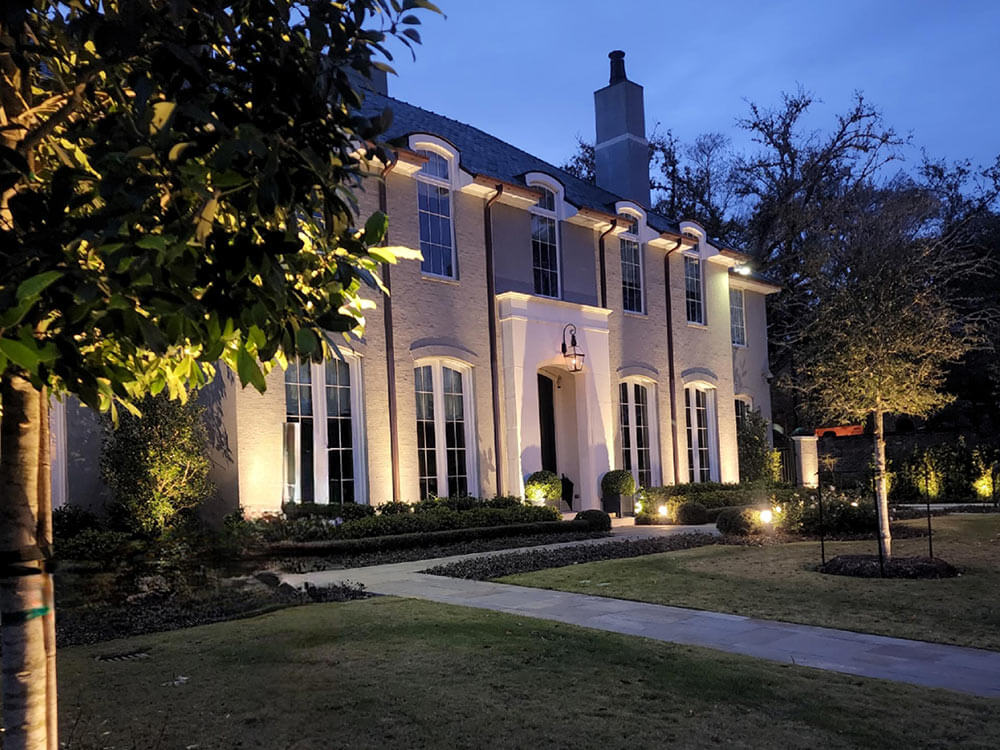
Elevate Your Heights Bungalow After Dark
Good architectural uplighting can keep your Heights bungalow looking warm and welcoming long after the sun goes down. The right light makes your brick, porch columns, and classic bungalow details stand out instead of disappearing into the dark or getting blasted by harsh glare.
On summer evenings in The Heights, porches glow with festoon lights, kids ride bikes under big oaks, and neighbors gather outside. But many homes lose their charm at night. The brick looks flat, porch steps feel risky, and bright spots of light can bother the house next door. Thoughtful uplighting installation in The Heights lets you show off your home’s character, light walkways safely, and still be kind to your neighbors and the night sky.
We want to walk you through how beam angles, fixture placement, and shielding all work together to make your home look great from the street, the sidewalk, and the porch swing.
Reading the Facade: Brick, Columns, and Bungalow Bones
Heights homes often mix a lot of different textures in one front elevation. You might have:
- Brick or brick piers along the porch
- Wood porch columns or tapered Craftsman columns
- Exposed rafters or decorative brackets
- Deep eaves and a cozy front porch
Each of these surfaces reacts to light in its own way. Brick has bumps, mortar lines, and color shifts that give it personality. To bring that out, we like to graze it. That means placing the light close to the wall and aiming it up at a steep angle so shadows fall across the texture. The result is rich detail instead of a flat orange wall.
Wood or smooth columns are different. They look better with softer, wider beams that wrap around the surface. This keeps you from getting hot spots or bright “stripes” of light.
When we design uplighting installation in The Heights, we pay attention to details like:
- Facade color and how reflective it is
- How far the house sits back from the street
- Mature trees and where branches cast shadows
- Porch depth and how much light you already have from sconces or festoon string lights
The goal is to highlight the “bones” of the house, not blast the entire front with one big wash of light. We want your eyes to notice the brick columns, the porch roofline, and the bungalow trim, all with a gentle rhythm of light and shadow.
Beam Angles That Flatter, Not Flatten
Beam spread is a simple idea, but it makes a huge difference. Think of it as how “tight” or “wide” the light comes out of the fixture.
- Narrow beams are tight, like a flashlight focused on a small area.
- Medium beams are more relaxed, covering a bigger zone.
- Wide beams are broad and soft, great for filling in larger surfaces.
Here is how we usually match them to Heights homes:
- Narrow beams work well on tall columns, chimney stacks, and gable peaks, especially on two-story additions behind older bungalows. They pull your eye up without lighting the whole wall.
- Medium beams are our go-to for main brick walls and porch faces. They create even coverage that feels calm and consistent.
- Wide beams are helpful across a broader bungalow front or where the house meets plant beds, so the transition from architecture to landscape looks natural.
Aiming also matters. When you point a light straight up the center of a column, the surface can look flat and blown out. By placing the light slightly off-center and aiming it across the column, we create a soft shadow on one edge. That tiny bit of contrast adds depth and makes details pop.
We also think about where people will stand and sit. A Heights front porch is a hangout spot. So we look at the house from:
- The sidewalk and street
- The driveway and front walk
- The rocking chair or swing on the porch
From every angle, the light should feel balanced, not lopsided or blinding.
Shielding and Glare Control for Close Neighbors
Lots in The Heights sit close together. A fixture that is a little too bright or aimed a little too high can send light straight into a neighbor’s bedroom, across the sidewalk, or into the eyes of drivers passing by.
To keep the light where it belongs, we use shielding tools like:
- Glare shields that clip or mount onto fixtures to block the direct view of the lamp
- Cowls that extend the front of the fixture like a little hood
- Louvers that sit over the light source to soften and shape the output
These pieces hide the bright source from view but still let the brick or column glow. The effect is soft and intentional rather than harsh and flashy.
Good glare control also means:
- Aiming fixtures below typical eye level from the street and sidewalk
- Keeping beams off second-story windows and across property lines
- Choosing warmer color temperatures that feel calm and neighbor-friendly
- Using dimming or lower settings later at night so the house still looks nice, just gentler
With careful aiming and shielding, your home can stand out in a good way without being the “spotlight house” on the block.
Balancing Porch Glow, Path Safety, and Seasonal Use
Architectural uplighting is only one layer. Porch sconces, string lights, and subtle path lights all work together like parts of a simple lighting plan.
We often think about three goals at once:
- A welcoming porch glow where people gather
- Safe, clear steps and walkways
- Soft transitions from the house to the yard
You do not need a “runway” of bright path lights to make guests feel safe. Instead, we like shorter, shielded fixtures that mark the edges of steps and corners without shining straight into eyes. The uplighting on brick piers and columns can help guide people too, by showing where the porch starts and ends.
Late summer and early fall in Houston are full of evenings outside. Porch cookouts, football on the TV, kids running up and down the steps, Halloween decor, and then holiday lights not long after. When your architectural uplighting is set up well, it makes these moments easier and more comfortable. Stairs are clear, the front elevation looks sharp in photos, and the porch feels finished, not like a dark cave behind one bright ceiling light.
Layered light levels matter here. Many homeowners like:
- A brighter setting for parties and gatherings
- A medium “everyday” look for weeknights
- A softer late-night scene when most people are turning in
With the right transformer, controls, and dimming options, you can shift between these moods as days get shorter after August. In our work, we also think about how mosquito misting can pair with this, so porches and yards stay more comfortable while you enjoy your well-lit outdoor spaces.
Partner with Local Pros for Heights-Worthy Uplighting
A simple way to start is to walk outside after dark and really study what you see. Notice:
- Dark porch steps or spots where you hesitate to walk
- Brick or siding that looks flat instead of rich and textured
- Fixtures that shine in your eyes as you come up the walk
- Light spilling into windows, into trees, or toward the house next door
Fixing those issues is less about adding more light, and more about choosing the right beams, angles, and shields.
At Texas Natural Concepts, we focus on custom uplighting installation in The Heights and around Houston. We work with historic bungalows, brick cottages, and newer infill homes that sit close together and need thoughtful control. Our aim is to let your home keep its charm after dark, show off the brick and porch details you love, and still be respectful of neighbors and the night sky.
Get Started With Your Project Today
Transform your outdoor spaces with professional lighting design that highlights the best features of your home and landscape. Explore how our uplighting installation in the Heights can bring warmth, safety, and curb appeal to your property. At Texas Natural Concepts, we listen carefully to your goals, then tailor a lighting plan that fits your style and budget. Ready to talk specifics about your project? Simply contact us to schedule a consultation.