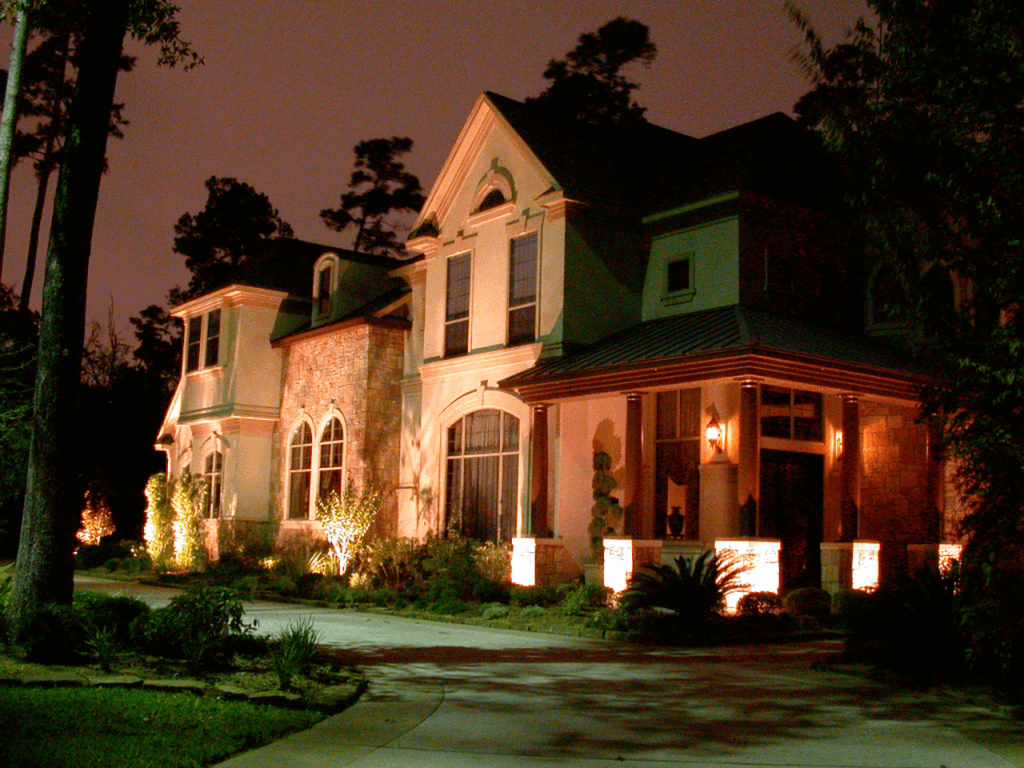
Outdoor lighting should make your yard more relaxing, not give you a new weekend chore. When your fixtures are constantly flickering, leaning, or corroding, it is hard to enjoy your patio, pool, or outdoor kitchen after a long day. The good news is that the right materials, finishes, and connections can keep your system looking great with far less work, even in our humid Cypress weather.
Around the Gulf Coast, cheap fixtures and weak connectors wear out fast. Heat, sun, moisture, and storms all team up on your lighting. When we design systems for our clients, we focus on long-lasting materials like brass, smart fixture finishes, and sealed connectors so lighting maintenance in Cypress, TX, stays simple over the long term.
How Cypress Weather Wears Out Outdoor Lighting
Cypress yards take a beating from the elements. We see:
- High humidity almost year-round
- Frequent rain and heavy downpours
- Puddling and occasional standing water in low spots
- Strong UV from long, sunny days
All that moisture sneaks into low-quality fixtures and connectors. Over time, this leads to:
- Corrosion on screws, stakes, and metal parts
- Faded, chalky finishes on painted fixtures
- Cracked housings and brittle plastic from UV exposure
- Failed gaskets that let water pool inside the fixture
Many homeowners notice the same things after only a season or two. Lights flicker after a storm. You see green or white buildup around screws. Lenses fog up from moisture, or you find water inside the housing when you try to change a bulb. Wire connections start failing so whole sections go dark.
Those issues are not only annoying, they add up. Constant replacements, repeated DIY fixes, and last-minute repairs before a party or holiday evening can turn a simple lighting system into a headache. Choosing better components at the start avoids a lot of that hassle.
Brass vs. Aluminum Fixtures in Cypress Yards
When we talk about fixture durability here, the big question is often brass versus aluminum.
Brass fixtures are usually:
- Heavier and more solid in the hand
- Naturally warm gold or brown in color
- Priced as a long-term, premium option
Aluminum fixtures are typically:
- Lighter in weight
- Often painted or powder-coated to add color
- Seen as a more budget-focused option
In our climate, solid brass handles the weather better. Brass resists corrosion, even with humidity and moisture in the air. Instead of flaking or bubbling, it slowly develops a natural patina, a surface layer that actually protects the metal underneath. That patina looks like character, not damage.
Lower-grade aluminum can struggle in Cypress conditions. If the paint or powder coat chips or scratches, the exposed metal can start to pit and corrode. Once that starts, it is hard to stop. You may see rough spots, peeling, or white oxidation on the surface.
Maintenance is another big difference:
- Brass often just needs an occasional wipe-down and a quick inspection
- Aluminum may need more frequent touch-ups, tightening, or repainting if the coating is damaged
For long-term, luxury landscape lighting, especially around pools, water features, and lush planting beds, brass is usually the smarter choice. Aluminum can still make sense in select spots where budget is the top concern and the fixture is more protected, but it rarely holds up as well as solid brass in our weather.
Fixture Finishes That Fight Corrosion and Fading
Fixture finish is not just about style. It is also a protective shield between the metal and our hot, humid air.
Common finishes include:
- Natural or aged brass
- Bronze finishes on brass
- Copper
- Painted or powder-coated aluminum
Natural and aged brass finishes are great for Cypress yards. As they darken and mellow over time, they hide small scuffs and water spots. Instead of looking worn out, they start to blend into the landscape, which many homeowners like.
Bronze finishes on brass also age gracefully. Even as the color deepens, the fixture still looks intentional and high-end. Minor wear does not scream for attention the way a chipped painted finish does.
Painted or powder-coated aluminum can look sharp when new, but our intense sun and UV exposure often break them down faster. Cheap coatings may:
- Fade or chalk in strong sunlight
- Peel or bubble where water sits
- Show bright scratches that stand out from the base color
If you go with coated fixtures, it helps to choose darker, textured finishes. They tend to hide dust, pollen, and small marks better than light, glossy colors. Around pools or water features, it is smart to ask for higher-grade coatings designed for wet or splash areas.
Why Sealed Connectors Matter in Cypress
Fixtures are only part of the story. The connectors that tie everything together are one of the first places a system can fail in our climate.
In a low-voltage lighting system, connectors join wires at each fixture and junction point. If those joints are not well protected, moisture and insects can get in. Professional-grade sealed connectors, such as gel-filled or heat-shrink styles, wrap the connection in a tight barrier so water cannot sit against the bare copper.
Common low-cost options, like piercing-style or simple twist-on connectors, leave gaps where:
- Rainwater and irrigation can seep inside
- Humid air condenses on the metal
- Ants and other insects can build nests inside boxes or fixtures
Water in a connector leads to corrosion and poor contact. That can cause dim lights, voltage drop at the end of a run, or whole zones going out after every big storm. Troubleshooting those issues often means digging through wet mulch beds and testing each connection.
Sealed connectors save time and frustration. When each connection is protected and the wire routing is planned to avoid low, soggy spots, the system is far more stable. At Texas Natural Concepts, we design lighting layouts with waterproof connections and smart wire paths that stand up to heavy spring rains and frequent irrigation.
Design Choices That Cut Down Future Maintenance
Good materials help, but design choices make a big difference in how often you have to deal with lighting maintenance in Cypress, TX.
Smart design includes:
- Correct transformer sizing so you are not overloading runs
- Proper voltage balancing so fixtures at the end of the line stay bright
- Wire routing that avoids areas that always stay wet
Layout decisions also matter. We try to:
- Avoid placing fixtures in low spots that hold water for days
- Leave a little slack in the wire so plants can grow without pulling connections
- Use sturdy stakes, risers, or mounts that will not lean in soft soil
Using consistent, high-quality fixtures and components across the system makes any future repair simpler too. When you are not dealing with a mix of random parts, it is easier to swap a fixture, update a connector, or add a new zone before peak outdoor use.
Spring is a great time to look over your system before long evenings outside. If you see corroded screws, peeling finishes, leaning fixtures, or lights that never seem to stay on, it may be time to upgrade to better materials and connections. With thoughtful design, quality brass fixtures, and sealed connectors, your outdoor lighting can handle Cypress weather while you simply enjoy your yard.
Get Started With Your Project Today
If you are ready to keep your outdoor spaces shining safely and reliably, our team at Texas Natural Concepts is here to help with expert lighting maintenance in Cypress, TX. We will inspect, adjust, and service your system so it looks great and operates efficiently all year. Reach out today to discuss your needs, schedule a visit, or request a tailored maintenance plan through our contact us page.