
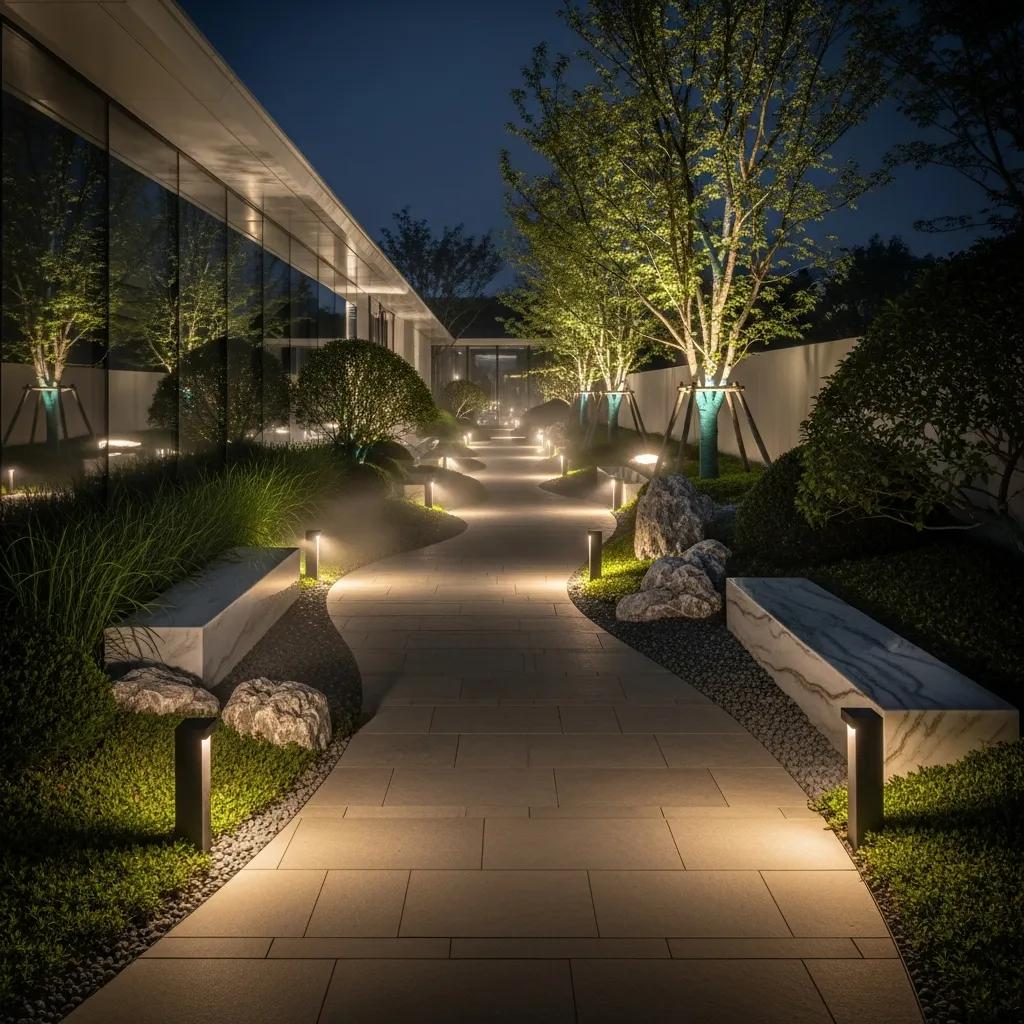
Luxury pathway lighting is about restraint: purposeful, warm illumination that enhances architecture and planting without turning your yard into a runway. This guide breaks down what makes pathway lighting feel high-end—controlled beam angles, warm color temperatures, proper lumen selection, and thoughtful placement—and explains how to avoid common mistakes that cause harsh or glaring light. You’ll find practical fixture recommendations, modern techniques like moonlighting and layering, spacing and lumen guidance to limit glare, and installation tips to keep systems efficient and safe. The article walks you from setting aesthetic goals and choosing fixtures to professional installation and upkeep, using pathway lighting, walkway lighting, and architectural walkway lighting as organizing terms. Read on for clear examples, quick comparison tables, and step-by-step advice to create discreet garden path illumination that improves curb appeal and nighttime usability.
Thoughtful architectural lighting—especially avoiding over-bright solutions—is essential to making outdoor spaces feel polished and welcoming.
Architectural Lighting Design: Avoiding Over-Illumination Artificial lighting shapes how we see texture, color, and form after dark. When designers fail to integrate light with an entry or approach—by under-lighting, over-lighting, or placing fixtures poorly—the intended perception of the architecture suffers. This research highlights the need for balanced, integrated lighting strategies that support entrance clarity without overpowering the composition.
This introduction leads into detailed sections covering aesthetic definitions, fixture comparisons, refined design techniques, the benefits of hiring local professionals in Houston, and a clear workflow from consultation to installation. Each section offers targeted, actionable advice for residential and commercial projects, with local considerations where relevant. Next, we define the core aesthetic markers you can apply immediately to any walkway lighting project.
What Defines High-End Pathway Lighting Aesthetics?

High-end pathway lighting rests on three clear attributes: warm, low-glare illumination; precise beam control and sensible lumen levels; and seamless integration with landscape and architecture so light creates depth instead of flat brightness. Together, these qualities produce elegant lighting that guides movement, highlights texture, and preserves a sense of place. The practical payoff is improved nighttime safety and elevated curb appeal that reads as intentional design. Below are three quick criteria to use when making decisions on fixtures and layout.
- Warm color temperature and modest lumen output: choose 2700K–3000K fixtures and keep lumen counts low for subtle pools of light.
- Controlled beam angles and shielding: prioritize downlighting, narrow beam control, or recessed installations to minimize glare.
- Architectural and landscape integration: align lights with paths, steps, and planting so the glow feels like part of the composition.
These criteria form the baseline for fixture selection and layout planning, and they naturally point toward a design-first approach where installation quality and professional planning turn the concept into reality.
Natural Concepts applies these same principles with custom designs and award-ready layouts that favor subtle placement and clean sightlines. As a family- and veteran-owned company, we combine licensed electrical work with tailored plans for Houston properties and a “red carpet, white glove” installation standard. Our complimentary design consultation translates aesthetic goals into a practical plan covering materials, spacing, and long-term maintenance.
How Does Subtle Illumination Enhance Outdoor Spaces?
Subtle illumination adds layered depth, reduces harsh contrasts, and uses soft visual cues to guide movement rather than relying on glaring floods. Warm, low-glare light encourages evening use of gardens and walkways by creating a welcoming, intentional atmosphere—not a securitized or clinical one. Functionally, subtle pathway lighting highlights edges, steps, and grade changes for safer navigation while preserving night-sky visibility and plant character. That balance supports both safety and aesthetic goals and increases perceived property value and nightly livability. Understanding how gentle light sculpts a space informs the principles for selecting and placing path fixtures.
What Are the Key Principles of Elegant Outdoor Path Lights?
Elegant path lighting follows clear rules of directionality, scale, color temperature, and material choice. Directionality favors downward or shielded light to avoid shining into people’s eyes. Scale means matching fixture height and size to walkway width and nearby plantings. Stick to 2700K–3000K to keep masonry and foliage warm and natural-looking. Durable finishes—like marine-grade aluminum or brass—help the fixtures sit right with the architecture. Low-voltage LED systems further enhance energy efficiency and long-term reliability. When each lamp supports the larger design narrative, the whole composition feels deliberate and refined. The next section covers which fixture types achieve those effects best.
Which Luxury Pathway Lighting Fixtures Create a Discreet Glow?
Luxury pathway lighting favors fixtures that stay visually quiet while allowing tight control over light distribution. Recessed/in-ground fittings, bollards, and mushroom/hat lights are three reliable families. Your choice depends on the desired visual impact, surface conditions, and how concealed you want the hardware to be. The quick comparison below helps match design goals with technical attributes.
Different fixtures serve distinct aesthetic and functional roles in pathway lighting.
| Fixture Type | Typical Output / Mounting / Beam Angle | Best Use / Aesthetic Effect |
|---|---|---|
| Recessed / In-ground | 50–400 lm / flush-mounted / narrow to medium | Seamless integration on paved walks; minimal daytime visibility |
| Bollard | 150–800 lm / surface-mounted / shielded 120° or less | Creates vertical rhythm and definition on wider paths |
| Mushroom / Hat | 100–400 lm / surface-mounted / wide soft spread | Low-profile perimeter glow with gentle diffusion |
This table highlights trade-offs so you can choose fixtures that balance concealment and usable light. The sections that follow explain installation contexts and stylistic impacts in more detail.
We source and install low-voltage LED fixtures and can recommend materials and brands suited to each application, ensuring the chosen parts match your design intent while meeting local installation standards.
How Do Recessed and In-Ground Lights Provide Seamless Integration?
Recessed and in-ground lights keep the walkway plane clean by placing sources flush with pavers or turf. They minimize visible hardware while creating localized pools of light. Proper housings, drainage planning, and suitable surfaces are critical—pavers are ideal; soft soils often need protective mounts to prevent shifting. Aesthetic benefits include preserved sightlines and an invisible fixture during the day, letting material texture be the focus. Maintenance typically involves periodic lens cleaning and ensuring low-voltage cable runs remain accessible. These installation details help determine when recessed fixtures are the best choice for a refined pathway scheme.
What Architectural Statements Do Bollard and Mushroom Lights Make?
Bollards bring vertical rhythm and scale, acting like punctuation along wider walks and drive edges. With shielding, they can focus light downward while avoiding glare. Finish and height matter—short, slim bollards read as subtle rhythm; taller, decorative bollards become intentional focal pieces that complement facades. Mushroom and hat lights offer a low-profile, soft-spread glow for perimeter planting and informal garden paths where ambient light is preferred over directional emphasis. Both families need careful spacing and proportion to avoid clutter: align bollards with steps or formal axes and use mushroom lights for even perimeter washes. Choosing fixtures with these visual roles in mind helps the landscape read as a cohesive composition.
How Can You Master Modern Path Lighting Design Techniques?

Modern path lighting combines layering, beam control, and sensible spacing to achieve subtle, high-end results that look intentional and natural. Key techniques include moonlighting from trees, carefully controlled downlighting, and spacing that avoids overlapping hotspots while still ensuring safe passage. These approaches build layered compositions with depth and focal definition without excessive brightness. Below are practical steps to follow during design.
Follow these actionable steps to implement refined walkway lighting:
- Layer light sources: pair low-level path lights with selective uplighting and tree-mounted downlights to create depth and texture.
- Control beams: specify fixtures with narrow beam angles or shields to prevent spill and glare.
- Calculate spacing: space fixtures so light pools overlap minimally, producing even, gentle illumination.
These steps move the plan from theory to a workable layout; the following subsections dive deeper into moonlighting and spacing strategies.
| Design Principle | Why it matters | Practical tip / Example |
|---|---|---|
| Spacing | Prevents hot spots and ensures even coverage | Use lower-lumen fixtures spaced wider instead of few high-output lights close together |
| Layering | Adds depth and improves safety | Combine moonlighting with low path washers for texture and navigation |
| Color temperature | Maintains cohesive mood | Stick to 2700K–3000K for warm, natural rendering |
| Glare control | Preserves comfort | Choose shielded fittings and downward directionality to protect sightlines |
This compact summary helps prioritize choices during layout and selection. The next section explains moonlighting specifics.
What Is Moonlighting and How Does It Create Natural Effects?
Moonlighting places fixtures high in tree canopies or on eaves to cast soft, dappled light down over paths—mimicking natural moonlight and adding cinematic depth. Mount fixtures above the canopy when possible, use narrow-to-medium beam angles, and aim to produce textured shadows rather than tight pools. Moonlighting works best with mature trees and when you want an atmospheric, naturalistic scene rather than regimented step lighting. It can also reduce the number of ground fixtures needed, keeping the daytime landscape cleaner. Paired with low-level path markers, moonlighting creates the layered, intentional look associated with high-end lighting.
How Do Optimal Spacing and Glare Reduction Avoid the ‘Runway Bright’ Look?
Good spacing and glare control prevent the “runway bright” problem by favoring lower lumen outputs, longer spacing with managed overlap, and fixtures with directional optics or shields. As a residential rule of thumb, use fixtures in the 100–300 lumen range and space them roughly 1.5–3 times the mounting height apart, adjusted for beam angle and path use. Reduce glare with downward aiming, full-cutoff or shallow-beam optics, and mounting heights that keep the light source out of sight lines. These tactics avoid bright hotspots and produce even, comfortable illumination suitable for evening strolls and landscape appreciation.
Why Choose Professional Pathway Lighting Services in Houston?
Hiring professionals ensures code-compliant electrical work, designs that respond to local climate and architecture, and durable installations that perform over time—important in Houston’s varied site conditions. Pros combine design sense, electrical expertise, and installation logistics to turn aesthetic goals into reliable systems. Local providers also understand how materials behave in humidity and seasonal changes, helping specify finishes and wiring methods that last. The paragraphs below outline the service advantages you should expect and how those map to customer outcomes.
Professional pathway lighting services deliver clear benefits:
- Licensed electrician installations reduce safety risks and ensure correct transformer and driver sizing.
- Custom design aligns fixture placement with architectural lines and landscape focal points to boost curb appeal.
- Energy-efficient low-voltage LED systems lower operating costs and simplify maintenance over time.
These service elements show why investing in professional design and installation yields better long-term value. The table below links service features to customer outcomes.
| Service Aspect | Benefit | Business differentiation / Example |
|---|---|---|
| Licensed electricians | Code compliance and safety | Proper transformer/driver installation and safe wiring practices |
| Custom design | Targeted illumination and higher curb appeal | Fixture selection and placement tailored to Houston architecture and landscapes |
| Warranty & maintenance | Long-term reliability and predictable upkeep | Professional maintenance plans reduce downtime and preserve appearance |
This table clarifies how professional services translate into dependable results. The following subsections detail design impact and LED advantages.
How Does Custom Design Elevate Your Houston Property’s Curb Appeal?
Custom design lifts curb appeal by placing light where it enhances architectural lines, key materials, and planting structure—so the property’s night view reads as a curated composition rather than random fixtures. Designers examine sightlines, façade materials, and approach directions to highlight texture and shadow in ways that complement daytime appearance. For Houston homes, factors like raised porches, wide driveways, and native plant palettes guide fixture selection and finish choices so the lighting feels right for the neighborhood. A considered lighting plan increases perceived value and homeowner satisfaction by making the home more inviting after dark, while also addressing safety and energy efficiency.
What Are the Safety, Security, and Energy Benefits of LED Path Lights?
LED path lights offer long life, lower energy use, and precise dimming and control compared with older sources—delivering safety and security benefits without harsh brightness. Modern LEDs last tens of thousands of hours, reducing replacements and total cost of ownership, and low-voltage wiring reduces electrical risk and simplifies installation. Well-directed LED lighting improves pedestrian safety by clearly defining walkways and steps while avoiding glare that obscures vision. These advantages make LEDs a strong choice for both residential and commercial applications where owners want efficiency, longevity, and a refined nighttime presentation.
How to Transform Your Outdoor Walkways with Subtle, High-End Lighting?
Turning walkways into refined, usable nighttime spaces follows a simple process: clarify goals, create a custom design, install professionally, and maintain the system for consistent performance. This workflow helps homeowners and property managers predict costs, timelines, and outcomes while focusing on three key results—beauty, safety, and durability. The numbered process below summarizes the recommended steps from concept to completion.
- Consultation: assess site goals, nighttime use, architectural features, and budget.
- Design: convert goals into fixture selections, layout plans, and electrical schematics.
- Install: complete a licensed, code-compliant installation with attention to drainage and concealment.
- Maintain: schedule periodic checks, clean lenses, and inspect drivers to preserve performance.
Following this sequence reduces surprises during implementation. The next subsections explain Natural Concepts’ specific process and how to request a free design consultation.
What Is the Process from Consultation to Installation with Natural Concepts?
Our process is straightforward: consultation → design → installation → maintenance. The site visit establishes goals, documents site conditions, and captures photos. During design we create a tailored lighting plan that lists fixture types, mounting details, beam angles, and projected lumen outputs. Licensed electricians handle installation with care for concealment, waterproofing, and transformer placement. We finish with a client handover covering system operation and basic maintenance. We stand behind a “red carpet, white glove” installation experience and offer follow-up maintenance to keep systems performing and looking their best.
How Can You Request a Free Design Consultation for Luxury Pathway Lighting?
To request a free design consultation, gather recent site photos, note typical evening uses of the property, and list the features you want to highlight or downplay—these items make the first meeting more productive. Contact us at 281-970-7800 or info@txnaturalconcepts.com to schedule a site visit or virtual consult; include your Houston-area address so we can plan accordingly. Expect the initial consultation to review goals and constraints; after that we’ll draft a custom proposal for your approval before any work begins. Preparing these details helps us deliver a realistic plan that moves efficiently toward elegant, subtle walkway lighting.
- Gather photos: recent images of paths, steps, and façades speed assessment.
- Define goals: note safety, aesthetic, and budget priorities to guide design.
- Reach out: call or email to schedule your free design consultation with Natural Concepts.
These steps make the first meeting productive and connect your design intent to professional execution, enabling a smooth path from concept to finished installation.
Frequently Asked Questions
What are the benefits of using LED lights for pathway illumination?
LEDs save energy, last far longer than traditional bulbs, and offer better control over color and output. That means lower operating costs, fewer replacements, and the ability to dial in warm, low-glare light that improves safety and looks inviting. Modern LEDs also integrate with dimmers and controls so you can adjust brightness for different uses and times.
How can I ensure my pathway lighting is environmentally friendly?
Choose low-voltage LED fixtures, consider solar where appropriate, and use timers or motion sensors to reduce run time. Select durable materials and aim fixtures to avoid light spill and skyglow. Thoughtful placement—lighting only where needed—protects habitat and keeps energy use down.
What maintenance is required for pathway lighting systems?
Routine maintenance is simple but important: clean lenses, check wiring connections, and test timers or sensors. Inspect fixtures and driver boxes annually, and address any settling or damage after storms. A yearly professional check keeps performance consistent and extends system life.
How can I choose the right color temperature for my pathway lights?
For a warm, welcoming feel, pick 2700K–3000K. That range preserves the natural tones of stone and plants. Cooler temperatures (around 4000K) can feel more clinical and are better reserved for specific commercial or task-oriented applications.
What are the common mistakes to avoid in pathway lighting design?
Avoid over-illumination, poor fixture placement, and ignoring glare control. Over-lighting flattens texture and feels harsh; bad placement creates dark spots or glare; and unchecked glare makes spaces uncomfortable. Prioritize subtle, evenly distributed light, shielded fixtures, and warm color temperatures for the best results.
How does professional installation impact the quality of pathway lighting?
Professional installation ensures electrical work meets code, fixtures are placed for optimal effect, and materials are specified for local conditions. Licensed electricians size transformers and drivers correctly and install wiring safely. Many pros also offer warranties and maintenance plans that protect your investment over time.
Conclusion
Well-designed pathway lighting elevates your outdoor spaces—improving safety while adding subtle, intentional beauty. By prioritizing warm color temperatures, controlled beam angles, and integration with landscaping, you can create a welcoming nighttime experience that complements your property. Working with professionals delivers a tailored design and a code-compliant installation that lasts. Ready to begin? Schedule your free design consultation with our team and let us help you transform your walkways into elegant, usable night spaces.