
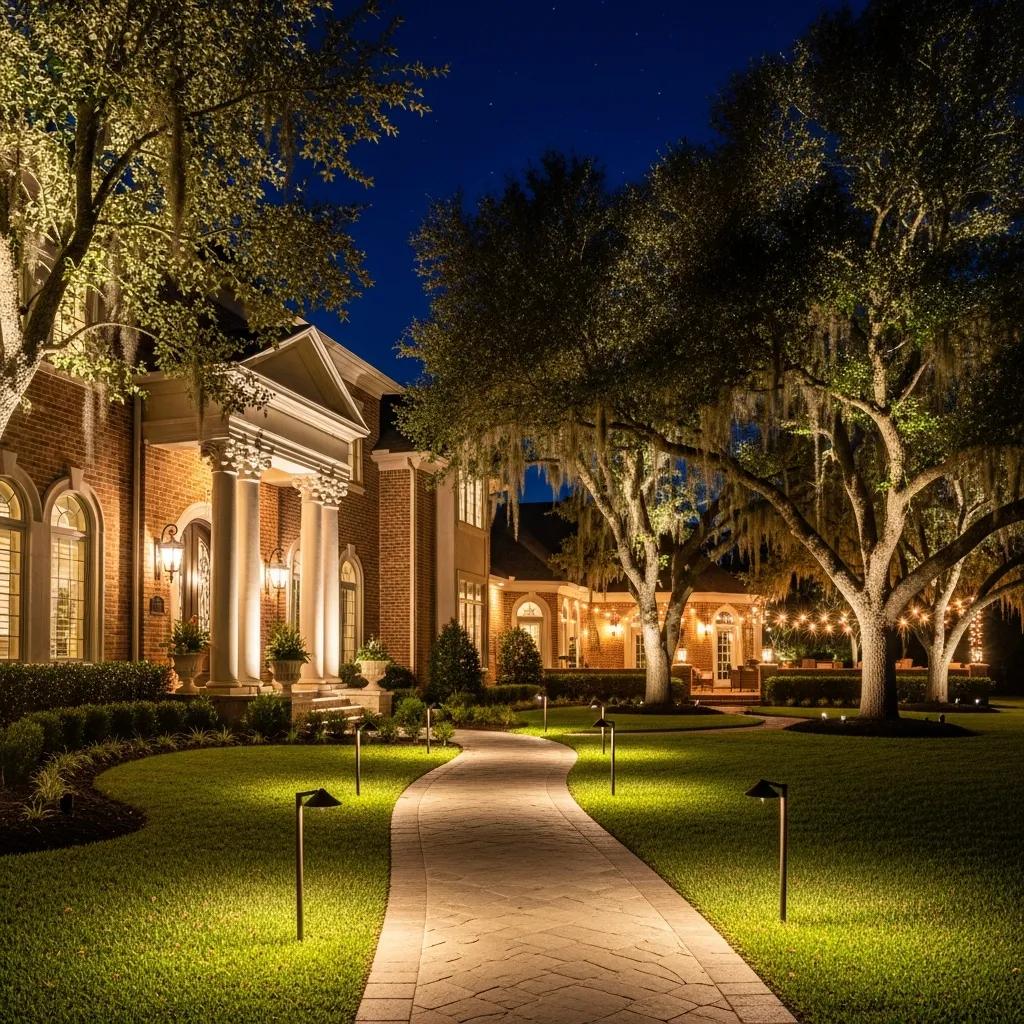
Thoughtful outdoor lighting for Houston luxury homes combines layered fixtures, smart controls, and careful placement to lift curb appeal, improve safety, and make outdoor spaces usable after dark. This guide walks you through how professional landscape lighting blends uplighting, moonlighting, pathway illumination and automation to highlight gardens, architecture and living areas while lowering energy use and strengthening security. We’ll cover which lighting types suit Houston’s climate, a clear design-and-install workflow, trends for 2024–2025, security-first strategies, LED retrofit and maintenance advice, plus realistic budgeting. Common issues—glare, patchy coverage, wasted energy and durability concerns—are met with practical fixes and specification tips for fixtures, beam angles and IP ratings. After the overview we detail fixture choices, a step-by-step planning process, current trends like smart automation, safety techniques, installation guidance, and cost frameworks to help you prioritize projects.
Natural Concepts , a family- and veteran-owned Houston company that installs custom landscape lighting and mosquito misting systems, offers complimentary design consultations and backs our work with satisfaction guarantees; consider the free consultation an easy next step if you want a site-specific plan after reading the planning advice below.
What Are the Best Types of Outdoor Lighting for Houston Luxury Homes?
The most effective outdoor lighting mixes visual drama, everyday safety and weather-resistant hardware. Key techniques are moonlighting, uplighting, pathway lighting, facade/architectural accents and pool or feature illumination. Each approach depends on fixture placement, beam spread and color temperature to achieve effects such as soft canopy glow, vertical texture, safe circulation or dramatic facade emphasis—while accounting for Houston’s humidity, storm exposure and coastal corrosion risk. Choose marine-grade finishes or IP65+ enclosures where needed, and pair LEDs with properly sized low-voltage transformers for efficient operation. The table below compares uses, common fixtures and expected cost and energy impact to help you decide.
| Lighting Type | Best Uses | Typical Fixtures | Cost & Energy Impact |
|---|---|---|---|
| Moonlighting | Soft canopy ambiance over yards and seating areas | Narrow-beam tree-mounted spotlights with adjustable mounts | Moderate fixture cost; low energy when fitted with LEDs |
| Uplighting | Accent facades, columns and mature trees for dramatic effect | Flood spots, well lights and LED projectors | Costs vary; higher wattage fixtures raise energy use |
| Pathway Lighting | Safe circulation along driveways, walks and garden paths | Low-profile bollards, path lights, low-voltage fixtures | Lower cost per unit, but totals rise with many fixtures |
| Facade/Accent | Highlight architectural texture and entry sequences | Wall washers, grazing fixtures, recessed well lights | Mid-range cost; LED options are efficient and controllable |
| Pool & Patio | Task and mood lighting for outdoor living and water features | Submersible fixtures, deck lights, step lights | Higher waterproofing cost; long-term savings with LEDs |
Use this comparison to prioritize lighting types that give the most visual and functional return for each area; next we take a closer look at moonlighting.
How Does Moonlighting Create Natural Ambiance in Landscapes?

Moonlighting mimics soft moonbeams by placing low-intensity fixtures high in tree canopies and angling light down to create layered shadows and gentle wash. The effect adds depth, improves wayfinding and keeps light comfortable—without harsh overhead glare. For Houston, pick corrosion-resistant finishes and adjustable mounts to handle seasonal growth and heavy rains, and favor warm white LEDs (2700–3000K) for flattering color and a welcoming feel. When done right, moonlighting blends seamlessly with pathway and feature lighting to guide sightlines from canopy to ground.
What Are the Benefits of Uplighting for Architectural Features?

Uplighting brings vertical elements—columns, stonework, porticos—to life by placing fixtures at or below grade and directing beams upward. This reveals texture, creates shadow and adds curb appeal after dark. For Houston homes, use fixtures with adjustable beam angles (10°–45°) and glare shields to protect neighbors and sightlines, and choose LEDs with CRI in the 80–90+ range to render masonry and finishes accurately. Balance uplighting with softer ambient layers so surfaces don’t read flat or overexposed. The next section shows how to fold uplighting into a complete layered design.
How to Design and Plan Custom Landscape Lighting in Houston?
Good landscape lighting starts on-site: identify focal points, circulation paths, safety priorities and existing vegetation and architecture. Apply layered lighting principles—ambient, accent and task—along with careful electrical and control planning to build durable, maintainable systems. A strong plan lists fixture types, beam angles, mounting methods, control zones and component ratings suited to Houston’s humidity and storms while minimizing light pollution. Deliverables should include scaled plans, fixture schedules, photometric intent and maintenance notes so the system can be upgraded easily for LED retrofits or smarter controls. Below is a straightforward process designers and homeowners can follow from concept to commissioning.
- Site Visit & Goals : Walk the property to document structure, plantings and homeowner priorities.
- Conceptual Design : Produce schematic layouts and scene concepts that layer ambient, accent and path lighting.
- Technical Design : Specify fixtures, transformers, circuit layouts and control zones; include photometrics.
- Permitting & Scheduling : Confirm local permit needs and coordinate electricians and landscape crews.
- Installation & Commissioning : Install wiring and fixtures, program scenes and complete a client walkthrough.
Following this workflow helps keep design intent and technical accuracy intact from the initial brief through final approval; below we expand each phase with typical timelines and responsibilities.
What Is the Step-by-Step Landscape Lighting Design Process?
A practical lighting workflow breaks the project into clear phases with assigned responsibilities and deliverables. Start with a collaborative site assessment and photo documentation, then develop concept sketches and a fixture schedule for review. After approvals, perform electrical load calculations and transformer sizing, map conduit routing and protect exterior circuits with GFCIs. Installation usually follows a phased plan—rough-in wiring, place fixtures, bury low-voltage cable and commission the system—culminating in a client tuning session to adjust beam angles and scene timings. Deliver final as-built plans, maintenance recommendations and controls programming so the system is serviceable and ready for future upgrades.
How to Integrate Outdoor Lighting with Houston Home Architecture?
Successful integration matches fixture style, finish and color temperature to the home’s architectural language—whether Mediterranean stucco, contemporary glass and steel, or traditional brick. Use warm whites (2700–3000K) for brick and stone and slightly cooler whites (3000–3500K) for metal and concrete to preserve material character. Choose fixtures that respect sightlines—discrete recessed washers for modern facades or bronze spot fixtures for traditional columns—and coordinate with the architect so lighting complements rooflines, cornices and entries. Thoughtful integration balances accent and ambient layers to enhance the architecture without over-illuminating.
What Are the Latest Outdoor Lighting Trends in Houston for 2024–2025?
For 2024–2025, Houston luxury lighting trends center on smart automation and scene control, wider adoption of high-CRI LEDs, and low-glare optics that protect nighttime ecology. Controllers now offer scene presets, energy reporting and seasonal adjustments that pair with home automation and voice assistants. Manufacturers are shipping LED fixtures with CRI >90, tunable white options and robust IP-rated enclosures built for Houston weather. We’re also seeing more dark-sky-friendly optics, amber tones to reduce insects, and integration with complementary services like mosquito misting to make outdoor living more comfortable.
- Smart Scenes : Automate arrival, entertaining and security lighting with programmable scenes.
- High-CRI LEDs : Specify CRI 90+ where material color fidelity matters at night.
- Low-Glare Optics : Use shields and narrow beams to limit light spill and neighbor impact.
Embracing these trends improves energy management and the after-dark experience while keeping designs aligned with best practices; next we look at how smart systems reshape luxury properties.
How Are Smart Outdoor Lighting Systems Transforming Luxury Homes?
Smart outdoor lighting centralizes zone control, scheduling and energy monitoring into controllers or distributed nodes that respond to occupancy, sunset or homeowner scenes. Integration with home automation enables voice control, remote diagnostics and scene presets—entertaining, security and low-light modes—while energy audits help refine schedules. Smart systems support geofencing, adaptive dimming and can tie into exterior services like mosquito misting for coordinated comfort. When choosing controllers, consider privacy and secure update paths to keep systems safe over time.
Why Is LED Lighting Essential for Energy Efficiency and Sustainability?
LEDs cut energy use dramatically, last far longer and maintain lumen output better than legacy halogen or incandescent sources—reducing replacements and lifecycle cost. They offer tunable white and high-CRI options that preserve facade and landscape color at night, and modular LED fixtures simplify future upgrades without extensive rewiring. In Houston’s warm climate, LEDs reduce heat near plantings and, paired with smart controls and photocells, deliver additional savings through dimming and scheduling. When planning an upgrade, review LED module specs, driver warranties and thermal management to ensure reliable long-term performance.
Industry research supports the shift to LED technology as a major driver of energy savings and lower operating costs in lighting.
LED Lighting for Energy Efficiency & Cost Savings The lighting industry has been moving from incandescent, fluorescent and HID sources to LEDs, largely because LEDs offer superior energy efficiency and cost savings. LED efficacy has outpaced conventional technologies and continues to improve, making LEDs the practical choice for long-term reductions in energy use. LED lighting efficacy: status and directions, PM Pattison, 2018
How Does Outdoor Lighting Enhance Security and Safety for Luxury Homes?
Outdoor lighting improves security and safety by eliminating dark hiding spots, clarifying circulation and signaling active occupancy with layered illumination—perimeter, entry and pathway layers supported by targeted motion sensors. Well-designed lighting boosts camera visibility, reduces trip hazards on steps and terraces, and creates a managed appearance that deters opportunistic intruders. Design should specify minimum light levels for critical zones, place motion or presence sensors to avoid false triggers, and include backup power or manual overrides for key entry points. The checklist below lists practical techniques that increase safety while preserving the home’s aesthetic.
Multiple studies show that improved outdoor lighting increases perceived safety and can play a role in reducing crime.
Outdoor Lighting‘s Impact on Safety & Crime Control Evidence from survey experiments indicates that brighter ambient lighting makes people feel safer outdoors. Participants reported higher perceptions of safety under increased nighttime lighting, and many were willing to support programs that upgrade dim street lighting to brighter LEDs—suggesting lighting can be a practical tool for community safety and well-being. Ambient lighting, use of outdoor spaces and perceptions of public safety: evidence from a survey experiment, J Kaplan, 2021
- Perimeter Layering : Light property edges and landscape boundaries to limit shadowed approach paths.
- Entry Emphasis : Use focused lighting at gates, main doors and garages to highlight access points.
- Motion-Activated Zones : Pair motion sensors with accent or flood fixtures for targeted deterrence.
These measures balance restraint and coverage; the next section explains recommended sensor placement and how to tie lights into surveillance systems.
What Lighting Techniques Deter Intruders and Prevent Hazards?
Effective deterrence uses visible perimeter lighting, well-lit driveways and selective motion-activated accents that reveal movement without constant glare. Position motion sensors to avoid foliage-triggered false alarms and align them with camera zones so illumination coincides with recording—adjust sensitivity and timeout settings during commissioning. To prevent trips, provide consistent path and step lighting—low bollards or recessed step fixtures reduce contrast and shadow while keeping surfaces visible. Blending security lighting with tasteful accenting preserves the property’s character while improving safety at night.
How to Plan Security-Focused Outdoor Lighting Solutions?
Start with a coverage map that shows blind spots, camera fields of view and pedestrian routes so you achieve overlapping illumination where needed. Specify fixture types and lumen levels per zone—brighter outputs at driveways and gates, lower levels for pedestrian paths—and include surge protection and GFCI circuits for safety. Integrate controls so security scenes can be temporarily overridden for events, and link lighting triggers with alarm and camera systems to synchronize recording. Keep a documented testing and maintenance schedule to ensure long-term effectiveness.
What Should Houston Homeowners Know About Outdoor Lighting Installation and Maintenance?
Professional landscape lighting installation involves careful site prep, trenching or directional boring for wiring, correctly sized transformers and a commissioning phase that tunes beam angles and scene programming to the design intent. Regular maintenance—inspections, lens cleaning, pruning and connection checks—preserves performance and prevents failures, and LED retrofits typically deliver quick ROI through lower energy use and fewer lamp replacements. Warranty coverage, service plans and scheduled maintenance visits protect system longevity and make it easier to add upgrades like smart controllers or mosquito misting. The table below summarizes common maintenance tasks, frequencies and expected outcomes.
| Maintenance Task | Frequency | Typical Outcome |
|---|---|---|
| Lens & Fixture Cleaning | Every 6–12 months | Restores brightness and beam consistency |
| Vegetation Pruning | Seasonal / as needed | Prevents beam blockage and overheating |
| Electrical Inspection | Annually | Verifies connections, GFCIs and transformer load |
| LED Module Retrofit | Every 7–15 years (if non-LED) | Cuts energy use and lowers maintenance costs over time |
Knowing these routine tasks helps homeowners schedule service and budget for future retrofits; the next section outlines what to expect from professional installation.
Natural Concepts offers professional installation , preventative maintenance plans, LED retrofits, energy audits and mosquito misting solutions; homeowners who want a turnkey approach can request a no-cost design consultation to align aesthetic goals with technical needs after reviewing maintenance priorities.
What Is the Professional Installation Process for Landscape Lighting?
A typical professional installation starts with site protection and minor excavations for low-voltage conduit or direct-bury cable, followed by fixture mock-ups to confirm sightlines and beam angles. Licensed electricians handle wiring, install transformers sized to the design load and add code-compliant connections and surge protection. Technicians then bury cable, secure fixtures and test circuits and GFCIs. Commissioning tunes beam angles, programs control schedules and includes a client walk-through to finalize scenes. Final deliverables usually include as-built plans, a fixture list and basic operation guidance to help owners maintain the system.
How to Maintain and Retrofit Outdoor Lighting Systems to LED?
Maintenance focuses on lens cleaning, seal and gasket checks, vegetation control and testing controls and GFCIs—ideally once a year and after major storms. LED retrofit options range from replacing internal lamp modules to swapping full fixtures when thermal or optical performance requires it; retrofits commonly reduce energy use by 50–80% and cut lamp-replacement labor. Estimate payback by comparing current energy and maintenance costs to projected LED savings, and factor in available service plans and warranties that ease upfront expense. Timely maintenance and planned retrofits keep design intent intact and extend system life.
How Much Does Residential Outdoor Lighting Cost in Houston?
Costs vary widely depending on property size, fixture quality, installation difficulty and extras like smart controls or mosquito misting systems. A simple pathway-and-entry package sits at the lower end, while full-estate architectural and feature lighting with advanced controls is a premium investment. Key cost drivers include fixture finish (bronze vs. marine-grade), fixture count, trenching or hardscape work, electrical upgrades and control complexity. The breakdown below helps homeowners understand the biggest influences when requesting a tailored quote.
| Cost Component | What It Includes | Budget Impact |
|---|---|---|
| Property Size & Fixture Count | Number of fixtures and linear footage of paths and edges | Major driver—more fixtures increase material and labor |
| Fixture Quality | Materials, finish, warranty and LED module quality | Higher-quality fixtures raise upfront cost but lower lifecycle expense |
| Installation Complexity | Trenching, hardscape changes and electrical upgrades | Adds labor and equipment costs for difficult sites |
| Controls & Integrations | Smart controllers, sensors and mosquito misting systems | Moderate to high, depending on automation depth |
This breakdown shows why pricing is design-dependent and why a custom quote is essential; below are simple tactics to prioritize the highest-impact items.
- Prioritize Safety & Entry : Spend first on paths and entry lighting for immediate safety and curb appeal returns.
- Invest in Quality Fixtures : Choose marine-grade or IP65+ fixtures for Houston’s climate to reduce long-term replacement needs.
- Plan for Controls Later : Start with basic zones and leave room in your budget for smart controllers after installation.
After identifying priorities, request a tailored, no-cost consultation for an accurate estimate. Natural Concepts offers free design consultations and can prepare site-specific proposals that include lighting, energy audits, LED retrofits and mosquito misting coordination to deliver a durable solution that fits your goals.
What Factors Influence the Cost of Luxury Outdoor Lighting?
Cost is driven by property scale and landscape complexity, fixture specifications and finishes, electrical work or panel upgrades, and whether you add advanced controls, surveillance integration or services like mosquito misting. Labor rates for licensed electricians and the need for specialized mounting or trenching equipment increase costs on constrained sites, while smart controllers and high-CRI LEDs add upfront expense but reduce operating costs. Material selection and warranty terms also affect lifecycle costs—picking durable fixtures often lowers total cost of ownership.
How to Budget for Custom Landscape Lighting Design and Installation?
Budgeting works well with phased implementation: start with safety and entry systems, then add architectural uplighting and focal points, and reserve later phases for full-property ambient layers and controls. A sample allocation could be 30–40% for safety/pathways, 30% for architectural and feature lighting, 20% for controls and programming, and 10% for contingency and future retrofits. Get multiple quotes with the same scope, verify fixture specs and warranties to compare apples-to-apples, and consider financing or phased installs to match cash flow while capturing early benefits.
Natural Concepts can prepare a tailored budget and provide a free design consultation to turn these priorities into a phased plan that fits your objectives and site conditions.
Frequently Asked Questions
What are the key considerations for outdoor lighting in Houston’s climate?
Houston’s high humidity, heavy rain and occasional salt exposure mean you should choose fixtures with corrosion-resistant finishes and high IP ratings (IP65+ where appropriate). LEDs reduce heat near plants and cut energy use, while careful placement and beam control minimize glare and light trespass. Regular inspections after storms and specifying weather-rated components keep systems reliable.
How can homeowners ensure their outdoor lighting is energy-efficient?
To maximize efficiency, specify LED fixtures, use properly sized transformers or drivers, and add smart controls for scheduling and dimming. Motion sensors and photocells ensure lights run only when needed. Routine maintenance—cleaning lenses and checking connections—helps systems perform efficiently over time.
What are the advantages of using smart outdoor lighting systems?
Smart systems bring convenience, energy savings and better security. You can control lights remotely, set scene presets for entertaining or security, and get usage data to optimize schedules. Integration with home automation and voice assistants also makes daily operation simpler and more flexible.
How does outdoor lighting impact property value?
Thoughtful outdoor lighting boosts curb appeal, highlights architectural features and makes homes feel safer—attributes buyers notice. Quality fixtures and a cohesive design often deliver a strong return on investment by making the property more attractive and functional after dark.
What maintenance is required for outdoor lighting systems?
Plan to clean fixtures every 6–12 months, prune vegetation seasonally to keep beams clear, and run annual electrical checks for connections and GFCIs. If you’re on older lamps, budget for LED retrofits every 7–15 years to maintain efficiency and reduce upkeep.
Can outdoor lighting be integrated with other home systems?
Yes. Outdoor lighting can tie into security cameras, alarm systems and home automation platforms to create coordinated responses—lights can trigger with motion alerts or be included in whole-home scenes for events and schedules, improving security and convenience.
Conclusion
Well-planned outdoor lighting for Houston luxury homes enhances beauty, increases safety and lowers operating costs when specified with the right fixtures and controls. Understanding the techniques and priorities in this guide will help you make informed decisions. For a tailored approach that fits your property and lifestyle, reach out for a professional consultation and let us help you create a nightscape that truly shines.