
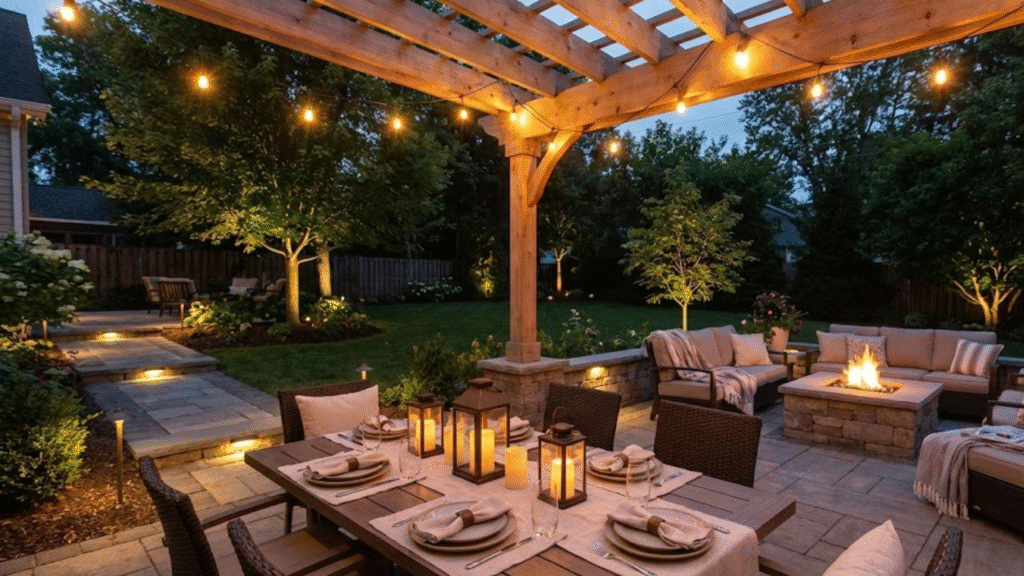
Warm, glare-free patio lighting is about choosing fixtures, color temperatures, and placement that produce comfortable, inviting light for gatherings — without harsh hotspots that tire the eyes. This guide walks you through why 2700K–3000K warmth works so well outdoors, how layered lighting and glare-control techniques create intimate, safe spaces, and practical tactics you can use right away: moonlighting, uplighting, pathlighting, shielded fixtures, diffusers, and smart controls. You’ll also find event-focused plans for dinner parties, poolside evenings, and outdoor movie nights, plus implementation steps, side-by-side comparisons of glare-reduction options, and a maintenance checklist to keep your system performing. Throughout, we emphasize local considerations and energy-efficient LED choices based on best practices current to 06/2024.
Why Choose Warm, Glare-Free Outdoor Lighting for Entertaining?
Warm, low-glare outdoor lighting helps people relax, see comfortably, and stay longer outdoors. Practically, 2700K–3000K LEDs reproduce that soft incandescent glow while cutting blue-rich light that can feel harsh. Pair that warmth with shielding and careful aiming so guests never look directly at bright sources — that’s what prevents discomfort or disability glare. The result: food and skin tones look natural, steps and edges are revealed safely, and light spill to neighboring yards is minimized. When you combine the right fixtures with zoning and layered ambient, task, and accent lighting, you get balanced visual comfort that supports conversation and evening living.
Next, we’ll translate those benefits into fixture choices and layering strategies you can apply to your yard.
- Warm, glare-controlled lighting makes outdoor gatherings feel relaxed and welcoming.
- Properly aimed fixtures reveal hazards without creating blinding hotspots.
- Shielded fixtures and correct aiming reduce light spill and neighbor disturbance.
- Lower Kelvin LEDs extend comfortable evening hours while keeping colors true.
With these advantages in mind, the next section explains how warm color temperature and finish choices create that golden, comfortable ambiance.
How Does Warm Lighting Enhance Backyard Ambiance?
Lighting in the 2700K–3000K range casts a warm, golden glow that softens shadows and flatters skin tones — it’s why gatherings feel more intimate and relaxed. On a technical level, lower correlated color temperatures reduce short-wave (blue) light that can feel clinical, while high-CRI LEDs keep food and fabrics looking natural. Fixture details matter too: frosted lenses, warm LED modules, and matte finishes soften output and hide individual diodes, avoiding sharp points of light. For best results, layer your lighting: dimmed overhead strings or bistro lights for overall mood, table-level task lighting for meal prep and dining, plus subtle uplighting to reveal architecture. Together these choices create comfortable scenes that support conversation without eye strain.
Now let’s look at how glare control keeps that warm glow pleasant rather than overpowering.
What Are the Benefits of Glare-Free Lighting for Guest Comfort and Safety?
Glare-free lighting reduces eye strain, keeps conversations comfortable, and improves navigation by preventing temporary blindness when people move between bright and dark zones. Shielding, louvers, and focused aiming keep the source out of direct view and put light where it’s needed — on steps, paths, and dining surfaces — which helps everyone’s eyes stay adapted. This approach also cuts disability glare around pools or stairs, lowering trip risk, and it minimizes light trespass into neighbors’ yards. In short, glare control is essential when you want entertaining-focused lighting that’s both beautiful and safe.
With those goals clear, the next section compares the specific techniques that create warm, low-glare patio lighting.
What Are the Best Lighting Techniques for Creating Warm, Glare-Free Patio Lighting?
The most reliable way to get warm, glare-free patio lighting is layering: ambient moonlighting, targeted uplighting, consistent pathlighting, and soft feature lighting — each tuned for low glare and warm color. Layering works because different techniques solve different visual needs: ambient sets the mood, task lighting makes activities possible, and accent lighting adds depth. For entertaining, favor low-angle, shielded fixtures and dimmable LED modules with CRI 90+ where color matters most. Below we compare common techniques so you can match methods to your yard and minimize glare trade-offs.
The table below compares common lighting techniques, their ideal use, pros and cons, and typical color temperature to guide selection for warm, glare-free entertaining.
| Technique | Ideal Use Case | Pros | Cons | Typical Color Temp |
|---|---|---|---|---|
| Moonlighting | Seating areas beneath trees | Natural, dappled ambient light with soft shadows | Needs taller trees and careful aiming | 2700K–3000K |
| Uplighting | Architectural features, specimen plants | Adds vertical depth and drama when shielded | Unshielded uplights can create unwanted silhouettes | 2700K–3000K |
| Pathlighting | Walkways, steps, pool edges | Provides safe, even illumination at low profiles | Poor placement can glare into people’s eyes | 2700K–3000K |
| String/Bistro Lights | Casual overhead ambiance | Warm, decorative glow ideal for dining | Exposed bulbs can be glaring without diffusers | 2700K |
Each technique plays a role in a layered plan; the trick is balancing contrast and glare control so no single source dominates.
Next we dive into how moonlighting, uplighting, and pathlighting each contribute to that warm, low-glare field.
How Does Moonlighting and Uplighting Contribute to Warm Ambiance?
Moonlighting places recessed or canopy-mounted fixtures in trees to cast a soft, downward pool of light that mimics moonlight — ideal over seating and dining areas. It relies on height and controlled beam spread so guests don’t see the light source directly. Uplighting uses low-mounted fixtures aimed up at trunks, walls, or plants; when shielded and carefully aimed, it creates depth without bright hotspots. For both, choose 2700K–3000K LEDs at moderate lumen levels and use adjustable beam angles to dial contrast. Done right, moonlighting and uplighting layer together to form a warm, gentle ambient field perfect for social evenings.
Now let’s cover path and facade lighting, which focus on safety and comfortable sightlines.
How Do Pathlighting and Facade Lighting Improve Safety and Visual Comfort?
Pathlights and facade fixtures improve safety by providing even, low-level illumination where people walk and by revealing building faces without blasting light into seating areas. The key is controlled distribution: low-profile fixtures with shields or recessed optics create predictable pools of light on walking surfaces, while facade lights with cutoff lenses wash walls softly. For steps and tight areas use narrow beam spreads and modest lumen outputs; for longer pathways select wider washes. When staged within a layered plan, these fixtures keep movement safe without becoming sources of glare.
Next: practical installation guidance — how to choose fixtures and accessories to keep glare down.
How Can You Implement Glare-Free Outdoor Lighting Solutions?
Implementing glare-free lighting starts with choosing shielded fixtures, warm 2700K–3000K LED modules, sensible lumen outputs, and aiming lights so sources aren’t visible from key seating areas. The three levers to control are optics (louvers and diffusers), placement (hide and aim), and output (lower lumen values plus dimming). A sensible installation flow: map activity zones and sightlines, layer ambient/task/accent fixtures, spec shielded fixtures or frosted diffusers where needed, and set up zoned controls and dimmers. Following dark-sky principles and low-voltage practices improves neighbor relations and energy efficiency while reducing light spill.
Below is a concise EAV-style comparison of glare-reduction options to help you weigh choices.
| Solution | Characteristic | Visual Outcome |
|---|---|---|
| Shielded fixtures (hoods/louvers) | Blocks direct view of LED source | Removes source glare and focuses illumination |
| Frosted diffusers | Scatters light for softer output | Reduces contrast but slightly lowers perceived brightness |
| Narrow beam optics | Concentrates light on surfaces | Minimizes spill; needs careful aiming |
| Aiming techniques | Downward aim and hidden mounting | Preserves sightlines and reduces light trespass |
Use the comparison above to balance softness and contrast for your site. Below is a practical checklist to guide installation.
- Map activity zones and sightlines before picking fixtures so lights are directed away from seating eye level.
- Specify 2700K–3000K LEDs with appropriate lumen outputs and CRI 90+ where accurate color matters (dining, food prep).
- Choose shielded fixtures or add louvers/diffusers where lights could be visible to guests to prevent direct glare.
- Use low-voltage transformers and zoned controls with dimming to create event scenes and reduce overall lumen levels.
These steps form a practical roadmap for homeowners and installers. If you’d rather have a pro handle aiming and tuning, a local specialist can help translate these steps into a site-specific plan.
Natural Concepts offers local expertise in custom landscape lighting with installations by licensed electricians. Serving Houston and nearby communities, our family- and veteran-owned team provides design-to-install services and free lighting quotes to assess your site. A consultation ensures aiming, shielding, and control zoning are specified to minimize glare and maximize warm ambiance.
With implementation covered, the next section offers creative, scenario-based lighting recipes for common entertaining formats.
What Are Creative Backyard Lighting Ideas for Entertaining Events?
Creative backyard lighting adapts warm, glare-free techniques into scene recipes for dinner parties, poolside gatherings, and outdoor movie nights so each event feels intentional and comfortable. The benefit comes from mixing ambient warmth, targeted task lights, and subtle accents so you get functional light without bright spots that break conversation or viewing. Start with the activity focal point — table, pool, or screen — then add low-glare task lights and soft perimeter uplighting to set the mood. The brief checklists below give fixture mixes and dimming cues to achieve each event while keeping glare under control.
Tailoring lighting to specific events follows the scenario-based design principles used in user experience research.
Scenario-Based User Experience Design for Lighting Scenario-based user experience research analyzes target users, behavior patterns, and real-world scenarios to guide lighting design. Applied to interior or exterior lighting, this method helps designers choose the right technology and layouts to create meaningful, usable light experiences.
Here are three practical, scenario-based lighting recipes you can use as a starting point.
- Dinner Parties: Use a dimmer-controlled, warm 2700K table pendant or string as the primary ambient source, add soft perimeter uplights, and place low-level pathlights for circulation that won’t glare into seating areas.
- Poolside Gatherings: Mark edges and steps with low-profile path or bollard lights, consider underwater-rated fixtures set to a gentle level for water glow, and use distant uplighting for depth while keeping seating zones shielded.
- Outdoor Movie Nights: Preserve screen contrast by minimizing spill; use low-level seating crest lights and indirect back-of-screen uplighting to aid navigation while avoiding reflections and screen glare.
Each recipe relies on warm color temps, dimming, and shielded fixtures so your events stay comfortable and visually pleasant.
How to Design Lighting for Dinner Parties, Poolside Gatherings, and Outdoor Movie Nights?
Design for events by assigning roles: ambient for mood, task for activities, accent for features, and safety for movement. For dinner parties keep center lighting dimmable and shielded, add low-intensity uplights and lanterns for layered warmth. Poolside setups should prioritize edge illumination and low bollards to mark perimeters, plus waterproof fixtures that create a soft water glow without strong reflections. For outdoor movie nights preserve screen contrast: use low step and path lights, back-of-audience uplighting for safe walkways, and avoid any fixtures that would throw light on the screen. Across the board, choose 2700K–3000K LEDs, zoned dimming, and shielded optics to keep scenes comfortable.
Which Warm Outdoor Lighting Fixtures Best Suit Different Entertaining Themes?
Match fixture form to function: string lights and lanterns give warm overhead ambiance for casual dining; recessed step lights and low bollards provide unobtrusive safety for walkways; shielded spotlights accent features without blinding guests. Exposed filament-style bulbs offer charm but should be diffused or hung out of direct sight to prevent glare. For dining areas prioritize high-CRI, warm LEDs and use dimmers to fine-tune brightness. Fixtures with adjustable aiming and compatible diffusers make it easier to tailor scenes to different entertaining themes.
How Does Custom Landscape Lighting Design Enhance Your Outdoor Entertaining Space?
Custom landscape lighting turns an ordinary backyard into an event-ready living area by aligning fixture choice, placement, and control zoning with your site’s architecture and how you use the space. A good design process includes site analysis, concept plans, fixture and spec selection, and final field tuning. Custom plans address sightlines, neighbor impact, and energy use, often integrating low-voltage systems and smart controls so scene changes are simple. The outcome is a lighting system that extends usable hours, improves safety, and adds real lifestyle value to your outdoor spaces.
Natural Concepts’ design and installation services deliver site-specific lighting plans installed by licensed electricians. Our award-recognized, family- and veteran-owned team serves Houston-area homeowners with a consultative process — site visit, tailored lighting plan, and professional installation — emphasizing warm 2700K–3000K solutions, glare control, and scene-based controls. Requesting a design consultation will help you understand budget, fixture selection, and sequencing for event-ready ambiance.
What Is Natural Concepts’ Approach to Personalized Warm, Glare-Free Lighting?
We take a site-first approach: assessing how you use outdoor living areas, the geometry of your architecture, and landscape assets to build layered plans that prioritize warmth and low glare. Installations are handled by licensed electricians and focus on design quality — shielded fixtures, warm LED modules, and zoning controls — so scenes are tuned for entertaining. Our local, hands-on method ensures your lighting looks right and performs safely, letting you enjoy longer, more comfortable evenings outside.
How Do Smart Outdoor Lighting Systems Integrate for Convenience and Energy Efficiency?
Smart outdoor lighting ties dimming, zoning, scheduling, and remote control into one system so scene setup is fast and energy use is lower. Centralized controls let you switch between presets for dinner, party, or movie with one tap; scheduling and motion-based dimming reduce output when full light isn’t needed. Smart dimming keeps the warm look while cutting lumen output to reduce glare and extend LED life. Integration options include app, voice, and timer controls — useful tools that let you match light levels to the event without fuss.
How to Maintain and Upgrade Your Warm, Glare-Free Patio Lighting?
Keeping your glare-free lighting working well means routine checks: lens cleaning, aiming adjustments, and timely LED retrofits that preserve color and beam control. Preventive maintenance stops lumen shift, color changes, and loose fixtures from creating new glare or safety issues. Build a seasonal checklist to clean lenses, verify transformers and low-voltage connections, re-aim fixtures after plant growth or grading changes, and confirm smart controls and dimmers are working. When retrofitting, choose LED modules with stable 2700K–3000K color, high CRI, and compatible optics to maintain the look and performance you want.
The table below gives a simple maintenance roadmap you can follow.
| Item | Maintenance Task | Frequency | Benefit |
|---|---|---|---|
| Lenses and covers | Clean and remove debris | Every 3–6 months | Restores intended output and reduces hotspots |
| Aiming checks | Re-aim and adjust beams | Annually or after landscaping changes | Maintains glare control and correct illumination zones |
| LED module inspection | Check color consistency and lumen output | Every 2–5 years | Ensures warm color temp and high CRI for dining areas |
| Control system test | Verify dimmers, timers, scenes | Semi-annually | Prevents scene drift and maintains energy savings |
- Routine maintenance prevents glare and safety issues.
- LED retrofits boost efficiency while preserving warm light quality.
- Professional inspections catch aiming or wiring problems early.
After following these maintenance steps, consider whether smart controls are the right next step for your setup.
What Are Best Practices for Outdoor Lighting Maintenance and LED Retrofits?
Best practices include a regular cleaning schedule, seasonal aiming checks, and choosing retrofit LEDs that match original color temperature and provide good lumen maintenance. Clean lenses every three to six months to prevent dirt from reshaping beams and increasing contrast, and re-check aiming after significant plant growth or hardscape changes. For retrofits select LEDs with stable 2700K–3000K output, CRI 90+ for accurate color, and controlled optics to keep glare low. Document your dimmer and scene settings so you can restore preferred looks after maintenance or power events.
When Should You Consider Upgrading to Smart Lighting Controls?
Upgrade to smart controls if you entertain often, want simple scene changes, need energy tracking, or prefer remote management for safety. Smart controls provide measurable returns: you can dim to reduce lumen output during low-use periods, schedule lights to avoid all-night operation, and recall scene presets instantly for events. Before retrofitting, confirm compatibility — transformers and wiring may need updating — and choose systems that preserve warm color temps and support zoning. For many hosts, one-touch scenes plus energy savings make smart controls a clear win.
Frequently Asked Questions
What types of fixtures are best for achieving warm, glare-free lighting?
Choose shielded fixtures, frosted diffusers, and low-voltage LED modules to achieve warm, low-glare lighting. Shielded fixtures keep the light source out of direct view, reducing glare; frosted diffusers soften output for a gentler appearance. Look for fixtures with adjustable aiming so you can direct light precisely, and select 2700K–3000K color temperatures to maintain a warm, inviting ambiance. Combining these features gives comfortable, attractive outdoor illumination.
How can I ensure my outdoor lighting is energy-efficient?
Use LED fixtures with efficient lumen-per-watt performance and pair them with dimmers and schedules to cut run time. LEDs use far less energy than incandescent bulbs and last much longer, reducing replacements. Smart controls, timers, and motion sensors further optimize use by lowering or shutting off lighting when it’s not needed. Low-voltage systems also help reduce energy consumption while delivering effective, controlled illumination.
What maintenance is required for outdoor lighting systems?
Regular maintenance includes cleaning lenses and fixtures every three to six months, re-aiming fixtures after major landscaping changes, inspecting LED modules every two to five years for color consistency, and testing controls semi-annually. These routine checks preserve beam shape, color, and energy performance, and help you avoid glare or safety issues before they develop.
How can I create different lighting scenes for various events?
Plan and zone your lighting so each area can be controlled independently. Identify focal points for each event — dining tables, seating areas, pools, or screens — and use dimmable fixtures to adjust levels. Save presets with a smart control system for easy recall: a low, warm scene for intimate dinners, a brighter mix for parties, and a contrast-friendly setup for movie nights. Scene zoning makes event setup fast and reliable.
What are the advantages of using smart outdoor lighting systems?
Smart systems offer convenience, energy savings, and precise control. With app or voice control, scheduling, and scene presets, you can quickly change moods or automate lights to protect your home. Smart dimming reduces energy draw and glare, while remote access and scheduling improve safety and lower costs. These systems make entertaining easier and keep your lighting efficient.
How does custom landscape lighting design differ from standard lighting solutions?
Custom design starts with a site analysis and tailors fixture selection, placement, and control zoning to your property and how you use it. Rather than one-size-fits-all fixtures, a custom plan aligns lighting with architecture, sightlines, and neighbor concerns while prioritizing warmth and glare control. The result is a system that looks intentional, performs well, and enhances outdoor living.
Conclusion
Warm, glare-free patio lighting makes outdoor entertaining more comfortable, safe, and inviting. By layering ambient, task, accent, and safety lights — and choosing warm 2700K–3000K LEDs, shielded fixtures, and zoned dimming — you can create scenes that let guests relax and stay later. If you want expert help, our design and installation services will translate these principles into a tailored plan for your yard. Start planning your perfect outdoor lighting setup today and enjoy evenings that feel effortless and welcoming.