
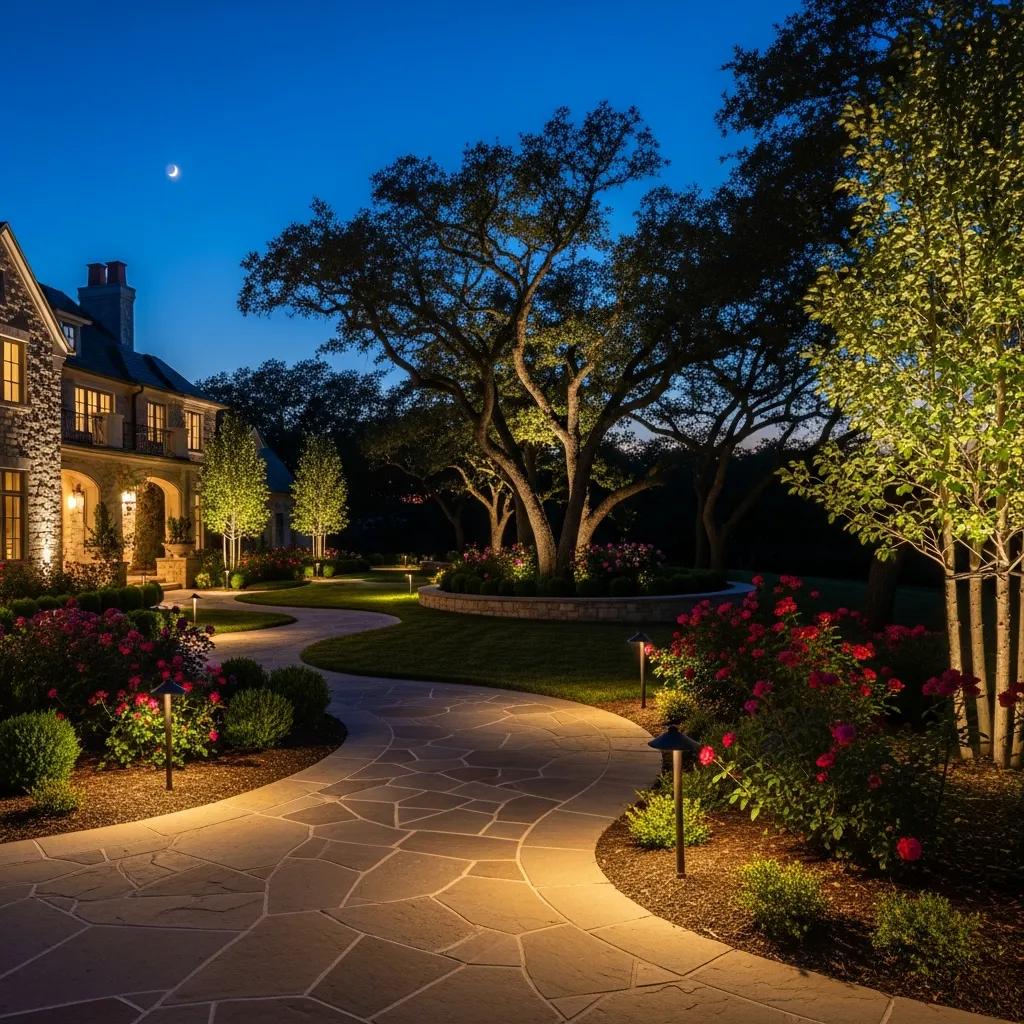
Thoughtful security lighting keeps your property safe without turning the yard into a sports arena. By choosing low‑glare fixtures, placing lights with purpose, and layering illumination, you limit hiding spots, help prevent trips and falls, and keep the nighttime feel of your landscape. This guide explains what discreet security lighting looks like, how moonlighting, uplighting, and pathlighting work, why LEDs and smart controls save energy while improving performance, and how to work with a local designer for a custom plan. We map techniques to common problem areas, compare efficient lighting options, and outline the simple next steps to request a free consultation from a Houston specialist. Throughout, practical terms like driveway lighting, discreet outdoor security lighting, and smart outdoor lighting are used to help property owners choose protection that fits their landscape.
Good outdoor illumination starts with careful design — safety should never mean sacrificing the look and feel of your property at night.
Subtle Design for Artificial Outdoor Lighting Small design choices shape both natural and artificial outdoor light; subtle decisions often make the biggest difference in how a space reads after dark. Lighting by design, 2007, contact us through our official website.
What Is Subtle Security Lighting and Why It Matters
Subtle security lighting is exterior illumination planned to improve safety and discourage unwanted activity while avoiding glare and visual clutter. It uses focused beams, controlled lumen output, and layered placement so paths and sightlines are visible without bathing the whole property in harsh light. The payoff is clearer surveillance, fewer trips and falls on walkways and driveways, and a nighttime atmosphere that keeps curb appeal intact. That balance matters — poorly placed floodlights create harsh contrast and light pollution, while a considered, subtle scheme removes hiding spots and gently guides movement without upsetting neighbors.
Studies reinforce that minimizing glare and light pollution improves both comfort and security in outdoor lighting design.
Security Lighting Glare & Light Pollution Evaluations of lamp glare and light pollution show how fixture type and lumen output affect comfort; appropriate selection and siting reduce discomfort while preserving effectiveness. Effects of Security Lighting Lamps on Discomfort Glare to Indoor Occupants, 2015
Natural Concepts , a veteran‑owned company in Houston, applies these principles every day — combining custom landscape lighting with services like mosquito misting. We focus on tailored design, pairing licensed electricians and pest control applicators with LED retrofits, routine maintenance, and energy audits to deliver complete outdoor solutions. Start by clarifying your lighting goals for safety and ambiance, then evaluate local providers who will match fixtures and controls to the specifics of your site. Next, we’ll compare subtle design with traditional stadium‑style lighting to show the key differences in practice.
How Subtle Security Lighting Differs from Stadium‑Style Lighting
The difference is intent and execution. Stadium lighting floods large areas with high lumen output and wide beams — useful for sports fields but often too harsh for homes and small businesses. Subtle security lighting focuses light where it’s needed, controls spill, and uses lower lumen ranges to reveal potential hiding places without creating visual discomfort. For example, a driveway lit with low‑voltage pathlights and motion‑activated uplights keeps sightlines clear and preserves surrounding darkness — a solution both homeowners and neighbors prefer.
Considering neighborhood impact — light trespass and sky glow — is essential when designing responsible outdoor security lighting.
Outdoor Lighting Aesthetics & Security Evaluation Thoughtful outdoor lighting reduces sky glow; community standards and careful fixture choice help limit light trespass while maintaining safety. A simple cost estimation technique for improving the appearance and security of outdoor lighting installations, 1998
That contrast matters because fixture selection, beam angle, and control strategy affect both security and energy use. When a designer limits beam spill with shields and picks an appropriate color temperature, a given wattage can feel far less intrusive. The next section outlines the main benefits that make tasteful, discreet fixtures the smart choice for homes and businesses.
The Benefits of Elegant Outdoor Security Lighting
Well‑designed outdoor security lighting deters unwanted activity, prevents accidents, and enhances a property’s appearance without wasting energy or disturbing the neighborhood. By lighting paths, entries, and perimeters where it counts, these systems reduce hiding spots and lower the risk of slips, trips, and falls. Thoughtful illumination also boosts curb appeal — highlighting architecture and landscaping rather than masking it with glare. Modern LEDs and smart controls further cut operating costs and maintenance, delivering long‑term value while preserving nighttime character.
- Deterrence without glare : Targeted light removes hiding places while keeping privacy intact.
- Safer movement : Path and driveway lighting guides people and vehicles to reduce accidents.
- Aesthetic uplift : Tasteful illumination highlights features and improves curb appeal.
Those advantages lead us to the common techniques — moonlighting, uplighting, pathlighting, and façade lighting — that form a layered, discreet security strategy.
Which Lighting Techniques Give Discreet, Effective Security?
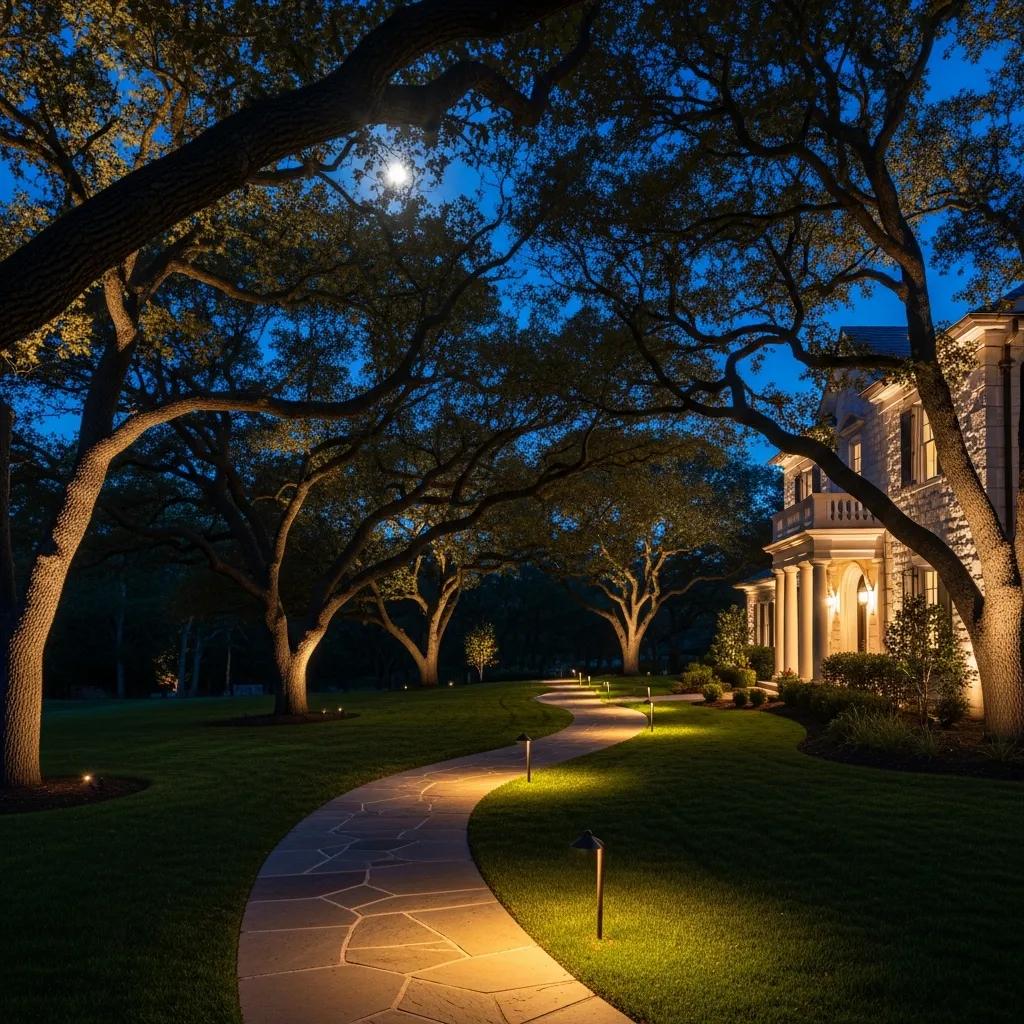
Discreet security relies on a toolkit that layers light for different purposes: moonlighting for soft canopy wash, uplighting for vertical emphasis, pathlighting for safe navigation, and façade lighting for focused visibility at entries. Each technique has placement rules and beam control measures to deliver security value without excess brightness. Used together, they create depth — perimeter awareness, travel guidance, and feature emphasis — so no single fixture needs to be overly intense. The table below compares these techniques to help you select the right mix for your site.
Each approach brings distinct security and aesthetic trade‑offs in real installations.
| Lighting Technique | Characteristic / Attribute | Security & Aesthetic Value |
|---|---|---|
| Moonlighting | Fixtures mounted high in trees with downward beams | Soft, broad wash that reduces deep shadows and mimics natural moonlight |
| Uplighting | Ground‑mounted fixtures aimed up at facades or trees | Highlights architecture and reduces underside shadows where someone could hide |
| Pathlighting | Low‑level fixtures along walkways and driveways | Guides movement, reduces trip hazards, and defines safe routes |
| Facade lighting | Controlled illumination at entries and architectural lines | Improves visibility at access points without broad spill |
How Moonlighting Enhances Security and Atmosphere
Moonlighting places fixtures high in trees to cast soft, downward light that reads like natural moonlight. Using narrow beams, shields, and warm colors creates dappled illumination that reveals movement while preserving atmosphere. The technique brightens broad areas enough to discourage hiding without producing a flat, glaring field — ideal for driveways, backyards, and lawns. For best results, designers set beam angles to avoid shining into windows and dial lumen output so the effect is gentle but useful.
Installing moonlighting well also requires attention to fixture placement and tree health; a professional site assessment ensures the result is consistent and unobtrusive. Good moonlighting then pairs smoothly with uplighting to bring emphasis to nearby architectural details.
Uplighting and Pathlighting: Practical Roles for Safety and Style
Uplighting exposes vertical surfaces — facades and tree trunks — to reduce dark pockets where someone might conceal themselves. Pathlighting marks routes for pedestrians and drivers, minimizing trip hazards. Uplights use narrow beams and careful aiming to wash surfaces without blinding neighbors; pathlights sit at consistent heights and intervals to create predictable visual guidance. Together they form a layered plan: uplighting improves overall visibility, while pathlighting provides the task lighting needed for safe movement. Choose fixtures with adjustable optics and warm color temperatures to keep the nighttime palette cohesive.
Fixture selection and layout are technical but straightforward: use shielded uplights near entries and low‑voltage pathlights spaced evenly along driveways and steps. With those basics in place, energy‑efficient options can further improve subtle security lighting while cutting operating costs.
How Smart and Energy‑Efficient Tech Improves Security Lighting
Smart and efficient technologies make discreet security lighting more useful and less intrusive by enabling targeted activation, dimming, and remote control. LEDs provide tight beam control and selectable color temperatures for low‑glare results, while smart controllers and motion sensors let lights stay low until activity demands brighter output. Timers and geofencing automate scenes by occupancy or time, increasing deterrence without constant light pollution. The practical result: better security with lower energy use and less upkeep.
The table below summarizes common modern technologies and the security and efficiency benefits they bring.
| Technology | Attribute | Value/Benefit |
|---|---|---|
| LED Fixtures | Beam control, dimmability, long life | Precise illumination with energy savings and low maintenance |
| Smart Controllers | App‑based scheduling and scene management | Automated control, remote adjustments, and occupancy simulation |
| Motion Sensors | Passive infrared or microwave detection | Triggered illumination that highlights activity while reducing constant glare |
| Timers/Geofencing | Scheduled or presence‑based activation | Predictable energy use and targeted deterrence during key hours |
Why LED Fixtures Work Well for Discreet Security Lighting
LEDs support subtle security lighting because they last longer, use less energy, and offer precise optics that limit spill and glare. Their dimmability and narrow lenses let designers focus illumination on paths and entries while keeping surrounding areas darker, which reduces light pollution and energy bills. LEDs come in consistent color temperatures — usually warm tones for residential settings — that maintain ambiance while revealing important detail. Lower wattage and fewer replacements make LED retrofits a practical upgrade for new installs and existing systems alike.
Select LEDs with integrated shields and quality optics so light goes where it should and plants and the night sky stay healthy. The next section explains how smart systems work with LED hardware to add a responsive security layer.
How Smart Lighting Systems Automate and Strengthen Outdoor Security

Smart systems link fixtures, sensors, and controllers so lighting scenes respond to presence, schedules, or remote commands. They can dim landscape lights late at night, brighten paths and entries when motion is detected, and simulate occupancy when a property is empty — all steps that raise perceived vigilance without constant brightness. Integration with home automation gives centralized control of zones, and smartphone apps let homeowners tweak settings from anywhere. By pairing motion sensors with timers, smart setups keep glare down and ensure light appears only where and when it adds security value.
Common practical setups include geofenced arrival scenes that gently illuminate driveways as a vehicle approaches and sensor‑triggered pathlights for late‑night movement. Once technology choices are set, professional design and local expertise make the plan work reliably in the field.
Why Choose Custom Security Lighting Services in Houston from Natural Concepts?
Every property has different sightlines, plantings, and access points that determine where light belongs and how it should be controlled. Natural Concepts brings local Houston experience and a veteran‑owned approach focused on custom design and aesthetic security. Our team includes licensed electricians and pest control applicators, allowing us to combine lighting with mosquito misting, LED retrofits, maintenance, and energy audits for a complete outdoor solution. A tailored plan avoids one‑size‑fits‑all floodlighting and instead preserves ambiance with layered, site‑specific choices.
Expect a simple process: a free consultation, site assessment, concept plan, and a carefully calibrated installation with maintenance options afterward. Our mix of design sensitivity, professional credentials, and a satisfaction guarantee makes local custom services the best route for discreet driveway lighting, perimeter solutions, and façade illumination that match your lifestyle and budget. Next, we walk through the typical design process so you know what to expect when hiring a provider.
The Custom Security Lighting Design Process for Homes and Businesses
A dependable design starts with a conversation and a site survey to locate problem areas, sightlines, and your priorities before specifying fixtures. From there, designers create a concept plan recommending techniques — moonlighting, uplighting, pathlighting — and select LEDs, transformers, and control strategies to meet security and aesthetic goals. Installation follows with careful placement, aiming, and shielding to control spill; systems are then calibrated for intensity and timing. Post‑installation walkthroughs and maintenance plans keep the system performing as intended.
This stepwise approach reduces surprises and clarifies costs, while giving you the chance to approve aesthetic choices and automation before installation. The next section highlights the trust signals and guarantees that make hiring easier.
How Natural Concepts Demonstrates Expertise and Ensures Satisfaction
Natural Concepts underscores professional capability with licensed electricians and pest control applicators on staff, which helps us safely integrate lighting with other exterior services. As a veteran‑owned business, we emphasize workmanship and customer satisfaction. Maintenance agreements, energy audits, and LED retrofit options give ongoing value by keeping systems efficient and responsive. These assurances reduce risk for property owners who want discreet, reliable security lighting without ongoing headaches.
Those safeguards support the technical fundamentals — precise aiming, proper shielding, and correct electrical integration — that sustain elegant security lighting over time. With experience in place, mapping lighting fixes to specific problem areas becomes straightforward, which we cover next.
How Security Lighting Raises Safety While Respecting Aesthetics
Security lighting improves safety by making targeted zones easier to see, cutting off hiding places, and guiding movement along driveways and walkways — all while honoring a property’s nighttime look. Reducing glare and choosing warm color temperatures preserve ambiance, and layered lighting prevents a single fixture from overpowering the scene. The result is a perimeter that feels watched and a landscape that still looks inviting after dark. Below we map typical problem areas to recommended, elegant lighting responses so you can prioritize improvements.
The table that follows connects common areas with specific security concerns and practical lighting strategies for real properties.
| Area (Driveway/Path/Perimeter/Facade) | Security Issue Addressed | Recommended Lighting Approach |
|---|---|---|
| Driveway | Vehicle arrival visibility, slip hazards | Low‑level pathlights and motion‑activated arrival scenes |
| Paths & Steps | Trip and fall risk | Evenly spaced pathlights and step uplighting |
| Perimeter | Hiding spots at property edges | Moonlighting and discreet perimeter uplights with shields |
| Facade & Entries | Concealed access points | Focused façade uplighting and targeted entry illumination |
How Discreet Lighting Deters Intruders and Prevents Accidents
Discreet lighting reduces the chance of concealment and increases the likelihood of detection — whether by neighbors, passersby, or cameras. Motion‑triggered scenes and timed lighting introduce uncertainty for would‑be intruders without subjecting the neighborhood to constant brightness. For accident prevention, consistent illumination of paths and steps improves depth perception and highlights changes in elevation, cutting slips and falls. A combination of sensors, precision optics, and layered placement gives you a system that discourages wrongdoing and guides safe movement.
These tactics work best within a holistic plan that considers sightlines, camera locations, and routine behaviors — a plan that also improves curb appeal and marketability, as described next.
How Elegant Security Lighting Adds Value and Atmosphere
Elegant security lighting boosts curb appeal by gently emphasizing architectural lines, textures, and focal points in a purposeful way. Homes and businesses with well‑considered nighttime presentation often make stronger impressions on buyers and visitors, translating to perceived value gains and a more comfortable environment. Energy‑efficient installations and maintenance plans are attractive selling points, signaling lower long‑term operating costs. When lighting reflects quality and context, it becomes an amenity and an investment in marketability.
Thoughtful lighting supports everyday enjoyment and resale narratives, making discreet security lighting a practical, multi‑purpose upgrade. For owners ready to explore these options, the section below explains how to request a free consultation with a local specialist.
How to Request a Free Consultation for Custom Security Lighting in Houston
Requesting a free consultation usually means sharing basic property details, pointing out trouble spots, and scheduling a site visit for a professional assessment. Natural Concepts offers complimentary consultations to evaluate needs, recommend LED retrofits, design layered lighting plans, and suggest maintenance or mosquito misting add‑ons where helpful. During the visit we’ll talk about desired ambiance, priority security zones, and automation preferences so we can deliver a tailored proposal. This no‑obligation step moves ideas into a clear scope without committing to installation.
- Gather basic information : Note property type, key problem spots, and your lighting goals.
- Provide visuals : Take photos or sketch areas that need attention (driveways, paths, façades).
- Schedule a site visit : Pick a time for a technician to assess sightlines and power access.
Following these steps speeds proposal creation. After the consultation expect a custom plan and scheduling options for installation.
What to Prepare for Your Security Lighting Design
A little preparation speeds design and improves accuracy: clear night photos of the property, notes on priority areas (driveway, backyard, entry), and any existing electrical access or automation ideas. Share your budget range and timeline so designers can propose realistic options. If mosquito control matters, mention it up front so we can propose integrated solutions. Good prep reduces extra site visits and helps produce a precise initial concept.
With those materials ready, a designer can draft a schematic and preliminary estimate during or soon after the visit. Then you can decide next steps with confidence.
What Happens After Your Free Security Lighting Consultation
After the consultation you’ll typically receive a custom proposal with a concept plan, fixture recommendations, control strategies, and a cost estimate for installation and optional maintenance. Review the proposal, request adjustments if needed, then approve the final design and schedule the work. Installers will aim, shield, and calibrate controls on site. Post‑installation follow‑ups and maintenance options help keep performance and efficiency over time. This clear workflow — consultation, proposal, installation, and follow‑up — moves you from planning to an elegant, effective lighting solution.
With a professional plan in place, homeowners and property managers can enjoy safer outdoor spaces that keep their nighttime character — without resorting to stadium‑style brightness.
Frequently Asked Questions
What types of properties benefit most from subtle security lighting?
Subtle security lighting suits many property types: single‑family homes, multi‑tenant residential buildings, commercial properties, parks, and gardens. These systems make pathways, driveways, and entries safer without overpowering the landscape. Properties with distinctive architecture or mature landscaping often get the most visible benefit, since tasteful lighting highlights those elements while improving security. Businesses that focus on customer experience also use discreet lighting to create inviting, safe environments.
How do I determine the best lighting techniques for my property?
Start by identifying the areas that need illumination — driveways, walkways, entries, and perimeter lines. Consider unique landscape features and any likely hiding spots. A professional lighting designer provides tailored recommendations based on layout and your aesthetic goals. Combining moonlighting, uplighting, and pathlighting usually creates an effective layered approach that balances security with ambiance.
Are there maintenance requirements for subtle security lighting systems?
Yes. Regular maintenance keeps fixtures performing and looking their best: clean fixtures to avoid dirt buildup, inspect wiring and connections for wear, and verify sensor and control operation. LEDs last longer than traditional lamps, but periodic checks are still recommended. Many providers offer maintenance agreements that include routine inspections and adjustments to keep the system effective and attractive over time.
What role do motion sensors play in enhancing security lighting?
Motion sensors add targeted illumination when movement occurs, conserving energy and reducing light pollution by keeping lights off during inactivity. When triggered, sensors brighten paths, driveways, or entry points to improve visibility and deter potential intruders. This responsive approach maintains a sense of vigilance without constant brightness, making sensors a practical part of a subtle security system.
How do I choose the right color temperature for outdoor lighting?
Color temperature affects mood and visibility. Warm tones (about 2700K–3000K) create a cozy, inviting feel and work well for most residential settings. Cooler temperatures (above 4000K) increase contrast and may suit some commercial or task‑focused areas. Consider the surrounding environment and the purpose of each zone — paths and gardens often benefit from warmer tones, while security‑critical areas may use slightly cooler light for clarity.
Can I integrate my security lighting with home automation systems?
Absolutely. Many modern lighting systems integrate with smart home platforms, letting you control outdoor lights via apps or voice assistants. Integration enables scheduling, dimming, scene setting, and geofenced arrival lighting. Automated lighting can also simulate occupancy when you’re away, adding a layer of deterrence while keeping the property’s nighttime look consistent.
Conclusion
Elegant, discreet security lighting protects your property while preserving its nighttime character — a practical upgrade for homeowners and businesses. Using techniques like moonlighting, uplighting, and pathlighting creates a layered approach that deters intruders and prevents accidents without overwhelming the landscape. Choosing energy‑efficient LEDs and smart controls lowers costs and maintenance, delivering durable benefits. When you’re ready, request a custom consultation to develop a plan that keeps your property safe and beautiful after dark.