
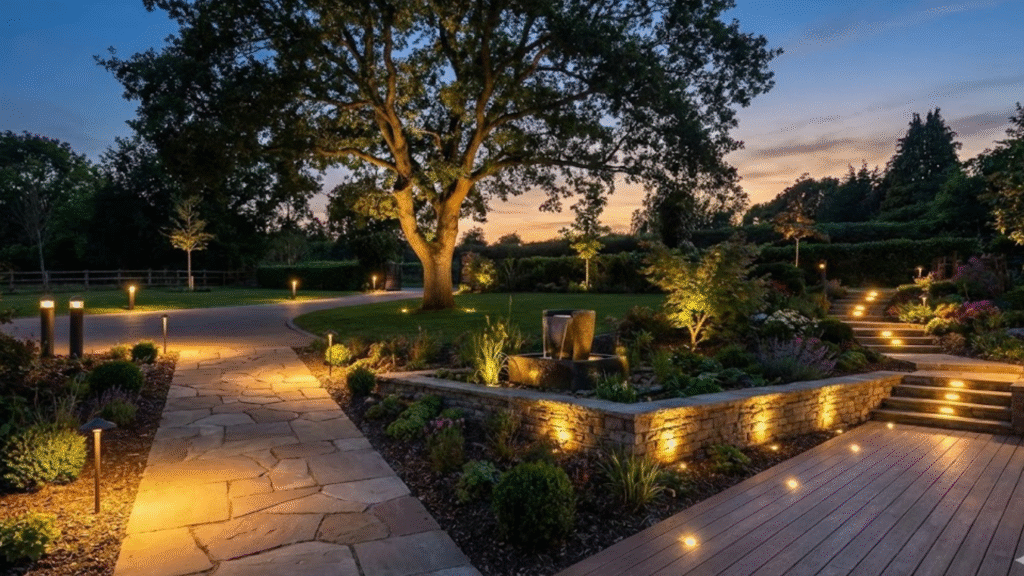
A good landscape lighting expert does more than just brighten the night — it makes your yard safer, highlights the details you love, and sets the mood for evenings outside. In this guide, we walk through the common types of outdoor lighting — from path lights and spotlights to uplighting and floodlights — and explain how each one can be used to solve real homeowner needs. If you’ve ever wondered how to balance safety with style or which fixtures work best for different areas, this guide breaks it down in plain, practical terms. We’ll cover core fixture types, uplighting and moonlighting techniques, floodlight uses, specialty options, and straightforward tips to choose the right lights for your landscape.
What Are the Main Types of Outdoor Landscape Lighting?
Landscape lighting generally falls into a few clear categories. Each type serves a particular purpose — whether it’s guiding guests, showcasing a specimen tree, or lighting a large area for security. Knowing the categories helps you plan a layered, effective design.
How Do Path Lights Enhance Safety and Aesthetics?
Path lights keep walkways and garden paths visible after dark, reducing trip hazards and guiding guests. They cast a soft, steady glow that makes movement easier and adds warmth to the yard. Path lights come in styles from simple and modern to more traditional, so you can pick fixtures that match your home’s look while improving nighttime usability.
What Roles Do Spotlights and Accent Lighting Play in Landscape Design?
Spotlights and accent lights are your tools for focus. Use spotlights to throw a narrow, dramatic beam on a tree trunk, sculpture, or architectural detail. Accent lights offer gentler illumination to reveal texture and shape without overwhelming the scene. Together they create depth and visual interest across the landscape.
How Does Uplighting Transform Outdoor Spaces?
Uplighting is set low and aimed up to dramatize vertical surfaces — trees, columns, or facades. Done well, it adds perceived height, highlights texture, and gives the yard a refined nighttime presence.
What Are Effective Uplighting Techniques for Trees and Architectural Features?
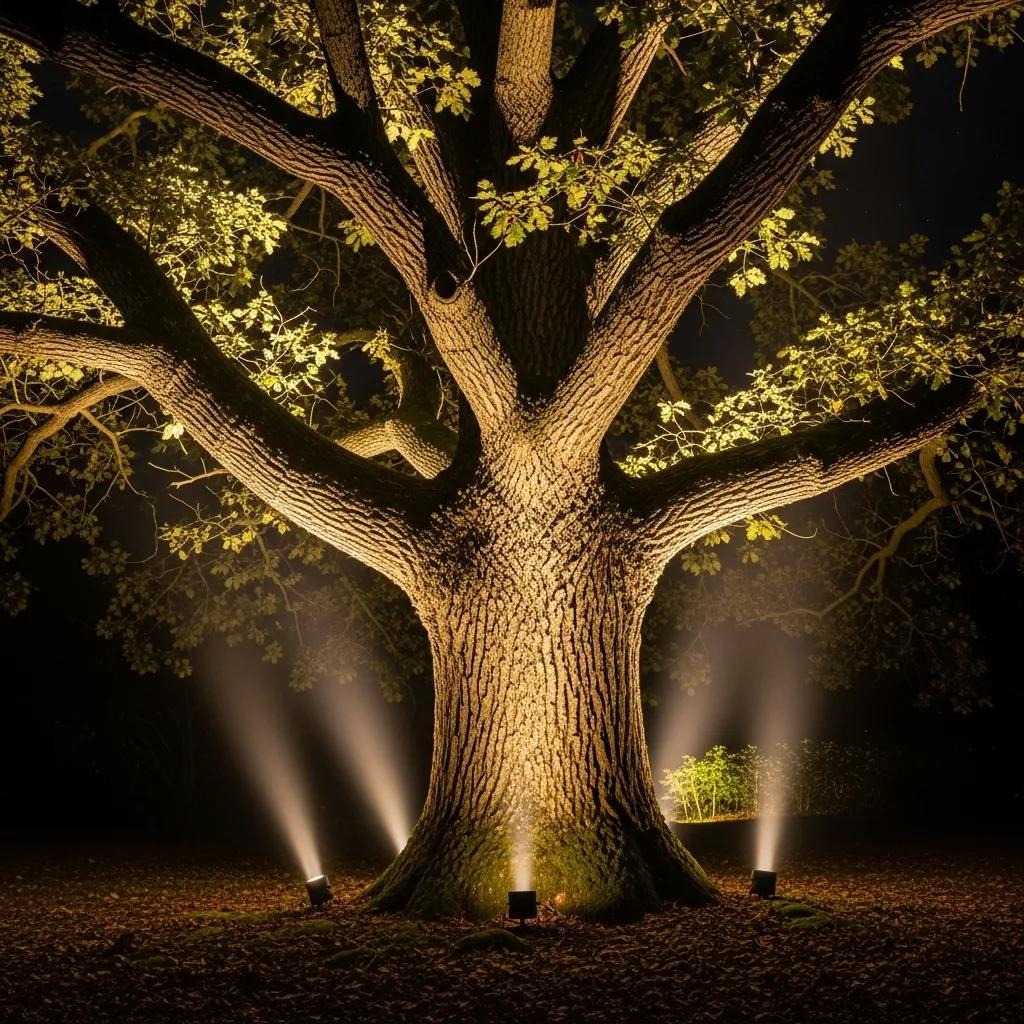
For trees, place fixtures at the base and angle them to show trunk lines and branch structure — that creates dramatic silhouettes and layered shadows. For buildings, use uplights to emphasize texture and architectural details. Choosing warm-color LEDs helps keep the scene inviting instead of harsh.
How Does Moonlighting Create Natural Ambiance in Landscapes?
Moonlighting mimics soft, natural moon glow by mounting lights up in trees and angling them downward. The result is a gentle, dappled light that feels organic and calm — ideal for patios, dining areas, and garden paths where you want subtle, functional illumination rather than bright, direct light.
What Are the Benefits and Uses of Floodlights and Area Illumination?
Floodlights are wide-beam fixtures meant to cover broad areas. They’re great for security, sports areas, and any spot where broad visibility matters.
How Do Floodlights Improve Security and Visibility?
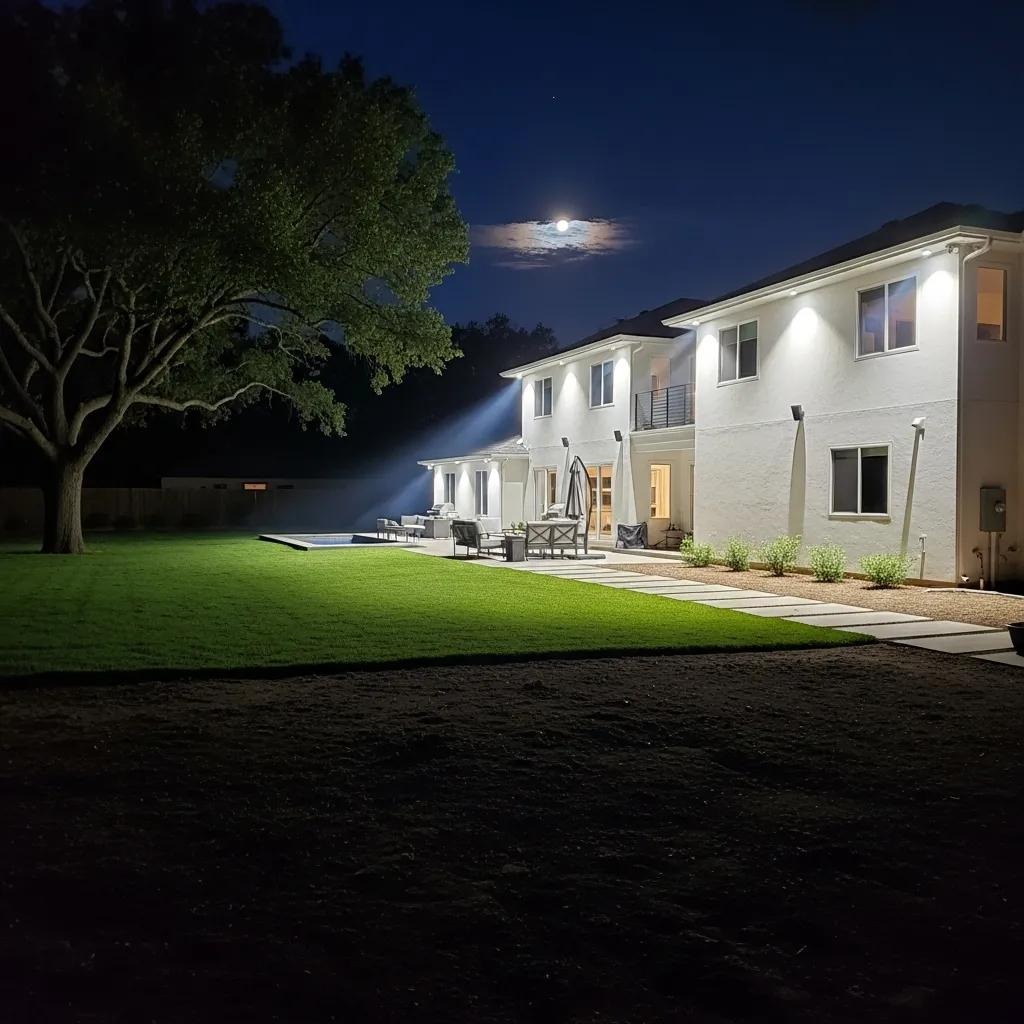
Floodlights discourage unwanted activity by removing dark corners and providing clear sightlines. Their wide coverage also makes night tasks and movement safer for homeowners and guests. For residential use, combine broad area lighting with focused accents so your yard is both secure and attractive.
What Are Best Practices for Floodlight Placement?
Place floodlights where they cover the most ground without creating glare for neighbors or blocking sightlines. Corners of buildings, garage areas, and pathways are common spots. Avoid mounting them excessively high — roughly 6 to 10 feet is a good rule of thumb for effective, targeted illumination.
Which Specialty Landscape Lighting Options Enhance Outdoor Living?
Specialty fixtures — hardscape lights, deck and step lights, and integrated accent pieces — make outdoor living areas safer and more enjoyable, while adding polish to the overall design.
How Does Hardscape Lighting Add Ambiance to Patios and Walls?
Hardscape lighting brings patios, retaining walls, and walkways into the evening experience. It creates atmosphere for gatherings and highlights built elements of your yard. It also helps prevent trips by lighting steps and level changes.
What Are Effective Deck and Step Lighting Solutions for Safety?
Recessed or low-voltage LED lights along step risers, deck edges, and railings provide subtle, non-intrusive guidance. They reduce fall risk and add a finished look to outdoor living spaces without overpowering the scene.
Comfort matters as much as lighting. Services like mosquito maintenance keep your outdoor spaces usable and pleasant so you can enjoy your lighting design without interruptions.
How to Choose the Right Landscape Lighting Fixtures for Your Outdoor Space?
Choosing fixtures comes down to function, look, and efficiency. Match fixtures to the tasks you need (safety, highlighting, ambiance), pick styles that suit your architecture, and prioritize long-lasting, energy-efficient options.
What Are the Advantages of LED Landscape Lighting?
LEDs use far less energy than traditional bulbs, last much longer, and offer flexible color temperatures and beam options. That makes them the practical choice for most landscape projects — lower power bills, less maintenance, and consistent performance.
How to Design Pathway Lighting for Functionality and Style?
Space path lights evenly so the walkway looks balanced and is evenly lit. Choose fixtures that complement your home’s exterior and vary heights subtly to create visual interest. The goal is consistent, glare-free illumination that enhances curb appeal.
Why Is Professional Landscape Lighting Installation Important?
DIY can be tempting, but professional installation ensures the system is safe, code-compliant, and designed to perform. Pros can also help you layer lights effectively and avoid common pitfalls.
What Are Key Design Principles for Layering Outdoor Lighting?
Layering combines ambient, task, and accent lighting to give depth and flexibility. Ambient light sets the overall level, task light supports specific activities, and accent light draws attention to features. Together they create a balanced nighttime composition.
How Does Expert Installation Ensure Safety and Longevity?
Professionals handle wiring to local code, choose weather-rated fixtures, and place lights for easy maintenance. That reduces electrical risks and helps the system last through Texas weather and landscape lighting seasonal ideas
| Lighting Type | Purpose | Benefits |
| Path Lights | Light walkways and paths | Improve safety and add welcoming appeal |
| Spotlights | Showcase specific features | Create focal points and depth |
| Uplighting | Light vertical surfaces | Highlight height and texture |
| Floodlights | Light larger areas | Boost security and visibility |
| Hardscape Lighting | Light patios and structures | Enhance ambiance and prevent trips |
Thoughtful landscape lighting makes your yard safer, more beautiful, and more usable after dark. With the right mix of path lights, spotlights, uplighting, and specialty fixtures, you can create evening spaces that look intentional and feel comfortable. Start with a plan, choose energy-efficient fixtures, and consider professional help to get the best long-term results.
Frequently Asked Questions
What factors should I consider when planning my landscape lighting design?
Think about what you want the lighting to do: guide, highlight, or brighten. Look at the layout of your yard and decide which features to emphasize. Consider energy use, maintenance, and local climate so fixtures hold up over time. A clear plan helps balance safety, beauty, and cost.
How can I maintain my landscape lighting fixtures?
Keep lenses and fixtures clean from dirt and debris so lights stay bright. Wipe fixtures with a soft cloth and mild soap, check wiring and connections periodically, and swap bulbs or components before they fail. Inspect after storms and schedule seasonal checks for long-term reliability.
What are the best energy-efficient options for landscape lighting?
LEDs are the top energy-efficient choice: they use less power, last longer, and offer flexible looks. Solar lights work well for small, low-use areas but can be less reliable in shaded spots. Look for ENERGY STAR-rated products when available.
Can I use smart technology with my landscape lighting?
Yes — smart controllers let you set schedules, dim lights, change color temperature, and group fixtures into scenes you control from your phone or voice assistant. Make sure fixtures and controllers are compatible with the smart system you prefer.
What are the common mistakes to avoid in landscape lighting design?
Avoid over-lighting or creating glare, which can wash out features and annoy neighbors. Don’t ignore scale — oversized fixtures look out of place. Plan for maintenance access and keep fixtures at appropriate heights for the intended effect.
How can I create a cohesive look with my landscape lighting?
Choose fixtures and finishes that match your home’s style, use consistent color temperature across the project, and vary heights thoughtfully for interest. Repeating materials and tones ties the design together for a polished, cohesive result.
Conclusion
Landscape lighting is one of the easiest ways to extend the life and enjoyment of your outdoor spaces. By combining path lights, uplighting, accents, and well-placed floodlights, you can create a yard that’s safer, more beautiful, and ready for evening living. If you’d like help turning these ideas into a plan, our team can design and install a lighting scheme that fits your home and lifestyle.